

Buy a hybrid inverter: what is in stock and what size to pick
We keep 62 hybrid inverter models in stock, from 1.2 to 125 kW. Single-phase 220 V for a house or apartment, three-phase 380 V for a site with loads split across phases, plus a separate high-voltage line at 450-750 V for larger plants. Buyers come to us with two scenarios. First: a house or country property on an unreliable grid that has to ride through a 4-12 hour outage. Second: a new build going solar, where a panel array and lithium batteries are already planned for a full off-grid day.
First, what we do not sell. No 12 V or 24 V automotive and camper inverters. The lowest battery voltage in this category is 32 V, most units run on 48-51 V, the rest on high-voltage 450-750 V. Looking for a 12 V / 3000 W inverter for a boat or motorhome? Wrong category, do not waste your time.
Sizing for your peak, not your average
Size it on peak draw, not average: whatever can switch on at the same time. An air conditioner pulls 4-5 kW at start-up, a water heater 2 kW, a borehole pump 1.5 kW. Our typical customer this year is a single-storey 100-150 m² house with an air conditioner, a water heater and a pump. For those we fit 6-8 kW.
Power ranges have their own pages: 3 kW for a workshop or a country house without a pump, 5 kW for an apartment or a compact house, 6 kW the workhorse for 100-150 m², 8 kW once a heat pump joins the load, 10 kW for a large house with a pool or EV charging. From 12 kW up it is three-phase sites and small business.
Single-phase 220 V or three-phase 380 V
Most private houses in Ukraine are single-phase. There we fit 48 V battery models, our deepest stock: 20 single-phase models against 42 three-phase. Three-phase 380 V matters once the load is already split across phases: three air conditioners, a water heater, a pool pump.
Then comes the battery fork. The low-voltage route: 48 V, 27 models, cheaper to assemble and service. The high-voltage one: 500 V or 750 V, lower current losses and thinner cabling, but the battery itself costs more and field repair gets harder. We suggest 48 V if the site stays under 12 kW and there is no electrician on hand nearby.
Besides phase count and peak load we ask one more thing: solar now, or in a year. A hybrid runs without panels anyway, off the grid and the batteries. You add the array when budget allows. One catch: the MPPT input needs headroom for the future array, otherwise you will be replacing the inverter itself a year later. Phase selection is covered separately: single-phase vs three-phase hybrid inverter →
What customers actually order (by web orders over the last 12 months):
| Model | Power | Supply | Battery | Efficiency |
|---|---|---|---|---|
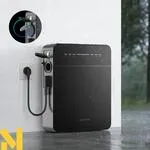
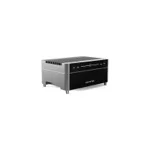
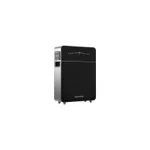
| Marstek Venus E Mini | 1.5 kW | 1×220 V | built-in LiFePO4 2 kWh | 94% |
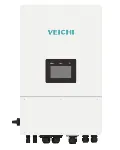
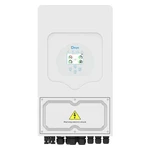
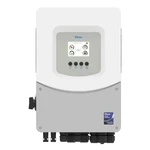
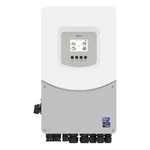
| Veichi VHS-5K-L01-K | 5 kW | 1×220 V | 48 V | 97.6% |
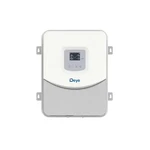
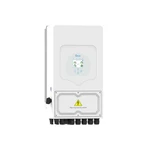
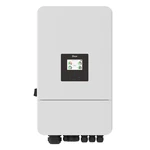
| Deye SUN-8K-SG04LP3-EU | 8 kW | 3×380 V | 48 V | 97.6% |
| Veichi SISV-10.2K-H(TWIN) | 10.2 kW | 1×220 V | 48 V | 98% |
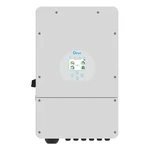
| Deye SUN-6K-SG05LP1-EU | 6 kW | 1×220 V | 48 V | 97.6% |
The first row surprised us. The 1.5 kW Venus E Mini moved 37 units across 38 orders and took the largest revenue in the category, despite being the smallest model we stock. The reason is simple: apartment, blackout, nothing to assemble from separate blocks. By unit count Veichi leads (192 against 44 for Deye and 44 for Marstek), because the SISV series is still the cheapest way to get 8-10 kW. Deye gets picked for three-phase work and for headroom on air conditioner start-up current: the SUN-6K-SG05LP1-EU charges the battery at 135 A on 48 V, so the charging side is no narrower than the inverter side.
Worth a separate mention is Veichi VHS-3K-30-H, which is not in that table. It is the smallest three-phase unit we carry: 3 kW, 3×380 V, high-voltage 450 V battery. We fit it when the site is already three-phase but the load is small and 6-8 kW makes no sense.
Brands
- Veichi: 23 models, 3-50 kW. The SISV series is single-phase on 48 V at 98% efficiency, our highest sales volume by unit count. The VH series is three-phase with high-voltage 450 and 750 V batteries, up to 98.8% efficiency. Veichi hybrid inverter review →
- Deye: 34 models, 5-125 kW, the widest range in the category. 13 single-phase and 21 three-phase, including high-voltage 500 and 750 V units for commercial plants. Certified for the European market. Deye review → · Deye 6 kW →
- Marstek: 5 models, 1.2-12 kW. Ready-made storage systems with a built-in LiFePO4 pack and wall mounting. Venus E Mini at 1.5 kW / 2 kWh for an apartment, Venus X at 6 kVA / 10 kWh in an IP65 enclosure, Mars I Plus three-phase at 12 kW with four MPPTs. The option for anyone who would rather not assemble a system from separate blocks.
Hybrid inverters by specification
- By power: 3 kW · 5 kW · 6 kW · 8 kW · 10 kW · 12 kW
- By phase: single-phase 220 V · three-phase 380 V
- By battery voltage: 48 V · 450 V · 500 V · 750 V
- By brand: Veichi · Deye · Marstek
Frequently asked
Is it in stock right now?
The main single-phase 5-10 kW models and the three-phase Deye units sit in our Kyiv warehouse. Rare items and high power from 25 kW are made to order, 5-10 days. Check availability on a specific SKU before paying, because the product page does show status, but on scarce models it shifts during the day, and the person who called in the morning sometimes takes the last unit before lunch.
How long is delivery?
From the Kyiv warehouse, 1-3 days across Ukraine via Nova Poshta or courier. Kyiv, Kharkiv, Odesa, Dnipro and Lviv fall inside that window. Other cities are quoted on request.
What about warranty?
Official manufacturer warranty on everything. The term depends on brand and model, and for Veichi and Deye it is 24 months. Warranty service runs through us, so nothing has to be shipped to China.
Can I buy without solar panels?
Yes, and most customers do: a hybrid inverter runs off the grid and the batteries, and you add panels later when the roof gets its turn, just buy the MPPT input with headroom for the future array, because otherwise in a year you will be replacing the inverter rather than the panels.
Which batteries should I use?
LiFePO4: 6000+ cycles, compact, maintenance-free. Single-phase models take 48 V batteries, high-voltage Veichi VH and Deye HP take a 450-750 V stack. We size capacity together with the inverter, because charge current depends on it.
Will you specify a complete kit for my house?
Yes. Send a list of loads with their power ratings and tell us how many hours you need to cover. We will size the inverter, the battery and the array. The manufacturer datasheet goes out before payment so you can check the figures yourself.
How is a hybrid inverter different from a grid-tie one?
A grid-tie inverter only runs while grid voltage is present, a hybrid keeps the house running off the battery when the grid drops. The full comparison with a table sits in the inverter types article →, and model selection for a specific house in the home guide →
Payment, warranty, support
Cash, bank transfer or sole-proprietor payment. For companies we work with VAT and provide full documentation. Our engineers size the power and design the system, and on complex sites they come out for commissioning. The consultation is free and happens before payment. Not sure what you need? Send us the site parameters: we will run the numbers faster than you will reconcile datasheets by hand.