Batteries for solar panels: what capacity to size for your home
Customers buy batteries for solar panels in two cases. First: offline mode during blackouts – the customer wants fridge, gas boiler, lights and a few outlets to run 6-12 hours without grid. Second: storage for night-time consumption under net metering. A typical customer this year is a 100-150 m² homeowner with 4000-7000 kWh/year consumption, installing a 5-15 kWh battery alongside a 5-10 kW hybrid inverter.
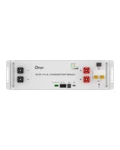
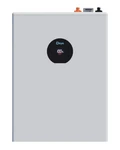
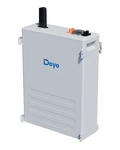
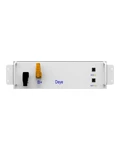
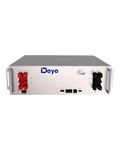
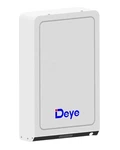
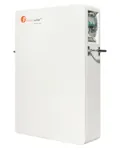
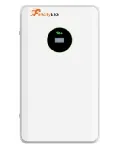
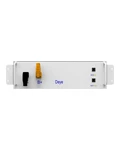
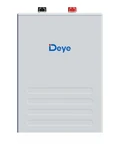
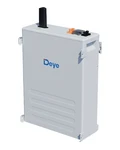
The chemistry we install in 2026: LiFePO4 (lithium iron phosphate). Why not lead-acid: 5000-6000 cycles vs 500-800 on AGM, 90% depth of discharge vs 50%, three times lighter, no off-gassing on charge. Why not NMC: LiFePO4 is safer thermally (no thermal runaway on overcharge) and 20-30% cheaper per kWh in 2024-26. Our warehouse stocks Pylon US-series, Deye SE-G5.1 Pro, Volts. We also stock EcoFlow.
First question we ask: how many kWh do you need
Baseline math: a typical 150-200 m² home gets 5 kWh (one battery). That covers 6-8 hours of fridge, boiler, lights, internet, laptops. A house with a heat pump, electric water heater or electric stove takes 10-15 kWh (2-3 batteries). Full off-grid without mains: 15-20 kWh plus a generator for winter weeks. Without a PV array, the battery charges from grid at night on the cheap tariff, but that is a different scenario altogether.
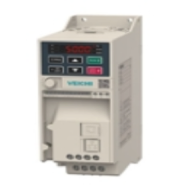
What else we ask before ordering. First: which inverter you run, because the comms protocol (CAN BUS, RS485) must match. Pylon US3000C pairs with most Deye, Veichi, Solis units; Deye SE-G5.1 Pro pairs with its own SUN-K series. Second: do you plan to expand capacity – Pylon US lets you stack up to 16 batteries (80 kWh), Volts up to 4 modules. Third: where you put it – LiFePO4 dislikes frost below -10°C during charging (it discharges down to -20°C), so an unheated garage or basement requires a thermal cabinet or relocation to a heated space. Warranty 5-10 years depending on the brand. We ship from Kyiv in 1-3 days.
| Model | Capacity, kWh | Voltage, V | Cycles | Application |
|---|---|---|---|---|
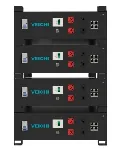
| Veichi VCLB-5K-D01 | 5.12 | 51.2 | 6,000 | Apartment, small house |
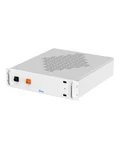
| Felicity LPBA48100-OL | 5.12 | 48 | 6,000+ | Home power station |
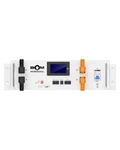
| Rosen BAT-51.2V-200AH | 10.24 | 51.2 | 6,000+ | House, small production facility |
| Felicity LPBF48200-H | 10.0 | 48 | 6,000+ | Medium house, office |
| Felicity LPBA48500 | 25.0 | 48 | 6,000+ | Large house, farm |
Manufacturers of batteries for solar panels
Our catalog features batteries from verified manufacturers with proven sales in Ukraine:
- Felicity: capacities from 5 to 25 kWh, Grade A LiFePO4 cells, built-in BMS, 6,000+ cycles. The broadest selection of capacities for cascade connection.
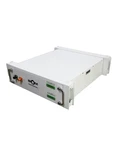
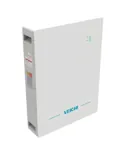
- Veichi: industrial-grade quality, precise specifications (BMS with CAN/RS485), wall-mount and floor-mount options. Models at 5 and 10 kWh.
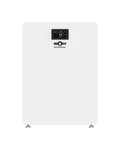
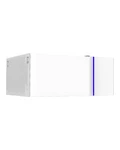
- Rosen: rack-mount and wall-mount solutions. 5 and 10 kWh capacity. BMS with CAN/RS485.
Batteries for solar panels by specifications
- LiFePO4 Batteries: all models with lithium iron phosphate cells
- 5 kWh Battery: compact solution for an apartment or small house
- Batteries for inverter: compatible with 48V hybrid inverters
Warranty & support
All batteries come with an official manufacturer warranty. Delivery across Ukraine via Nova Poshta and Delivery services. Our engineers will help calculate required capacity, select a compatible hybrid inverter together with solar panels for a complete system. Consultation is free of charge.