
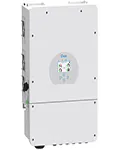
Hybrid inverter: when to buy one and how many kW for your home
Customers buy hybrid inverters from us in two scenarios. First: a cottage or single-family home on an unstable grid where you need to survive a 4-12 hour blackout. Second: a new build with a planned solar setup, where the array of PV panels and lithium batteries covers a full autonomous day. This year's typical customer: a single-storey 100-150 m² house with a heat pump or AC, a boiler and a borehole pump. For setups like that we ship 6-8 kW units.
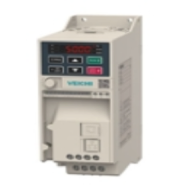
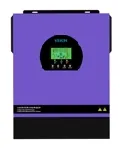
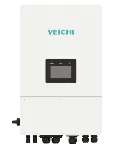
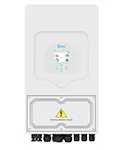
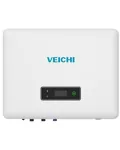
How it works. While the grid is up, the inverter powers the house from grid and charges batteries from solar in parallel. When the grid drops, within 10-20 ms the unit transfers to battery and keeps pulling solar from the MPPT input (no interruption, the AC compressor doesn't restart). When the sun sets and the battery is empty, it falls back to grid. This year's best-sellers from our warehouse: Veichi SISV-10.2K-H(TWIN) 10 kW, Veichi SV-6K-S 6.5 kW and Deye SUN-6K-SG05LP1-EU (Deye is pricier but more stable on AC startup spikes).
Broken out by power: 3 kW for a garage workshop or a cottage without a pump, 5 kW for an apartment or compact home, 6 kW the workhorse for 100-150 m², 10 kW for a large house with a pool or EV charging.
What we ask before the order
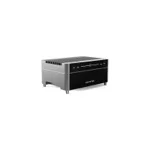
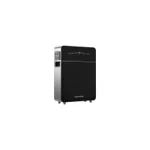
First: single-phase 220 V or three-phase 380 V. Most private homes in Ukraine are single-phase, so we ship 48 V battery models (our largest stock). Three-phase 380 V with multiple ACs and a boiler split by phase calls for a different lineup with a high-voltage 85-750 V battery (Veichi VHS, VHT). Second: peak draw, not average. AC startup gives a 4-5 kW spike, boiler 2 kW, borehole pump 1.5 kW. Sum up what may switch on simultaneously. Third: solar now or in a year. A hybrid works without panels too (as a UPS from grid and batteries), panels go in once the budget is there; the key is that the MPPT input matches your future array.
Two-year manufacturer warranty on both brands (Veichi and Deye). Delivery from our Kyiv warehouse in 1-3 days across Ukraine; rare units that are short-stocked take 5-10 days, ask us about a specific SKU. Manufacturer datasheet available before payment.
Comparison of best-selling models:
| Model | Power | Battery | Efficiency | Price |
|---|---|---|---|---|
| Veichi SISV-10.2K-H(TWIN) | 10.2 kW | 48 V | 98% | 29,500 UAH |
| Veichi SISV-8.2K-H(TWIN) | 8.2 kW | 48 V | 98% | 25,000 UAH |
| Veichi SV-6K-S | 6.5 kW | 48 V | 94% | 23,000 UAH |
| Veichi SV-4K-S | 4.0 kW | 24 V | 94% | 17,500 UAH |
| Deye SUN-6K-SG05LP1-EU | 6.0 kW | 48 V | 97.6% | 52,300 UAH |
Hybrid Inverter Manufacturers
We offer two leading brands:
- Veichi: 25 models from 4 to 50 kW. The SISV series with dual MPPT trackers and 98% efficiency delivers the best price-to-performance ratio. Detailed Veichi SIS-5K-H review →
- Deye: 16 models including single-phase and three-phase solutions. A globally recognized brand with EU certifications.
Hybrid Inverters by Specification
- By power: 3 kW · 5 kW · 6 kW · 10 kW
- By battery voltage: 24 V · 48 V
- By phases: single-phase 220 V · three-phase 380 V
Frequently Asked Questions
What is a hybrid inverter?
A device combining a solar inverter, charge controller, and UPS. It works from panels, batteries, and the grid, switching between sources automatically. Hybrid vs grid-tied inverters →
How does it differ from a regular solar inverter?
A regular inverter only converts DC to AC. A hybrid adds battery charging, UPS functionality, and off-grid operation when the grid is down.
How do I choose the right power rating?
Small home — 3–5 kW, medium — 5–8 kW, large — 10 kW+. Account for surge currents from air conditioners and pumps.
What batteries are compatible?
LiFePO4 (lithium iron phosphate) is the best choice: 6,000+ cycles, safe, compact. Most models support 48 V batteries.
Can it work without solar panels?
Yes. A hybrid inverter functions as a UPS from grid + batteries. Solar panels can be added later.
Warranty and Support
All hybrid inverters come with an official manufacturer warranty. Our engineers assist with power sizing, system design, and commissioning. Payment options include bank transfer and cash. Delivery via Nova Poshta and direct shipping across Ukraine: Kyiv, Kharkiv, Odesa, Dnipro, Lviv; other cities on request.