Solar panels on the roof: how many you need and which model to install
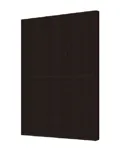
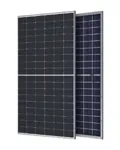
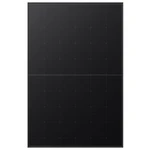
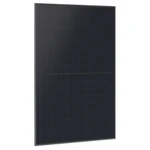
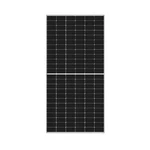
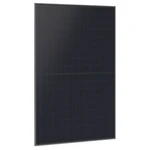
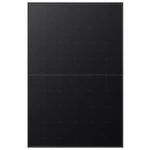
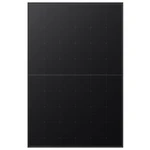
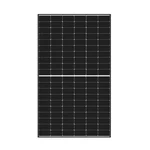
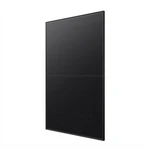
A rooftop PV system in Ukraine in 2026 is not about the "green tariff" (frozen since 2022, with Net Metering under discussion) but first and foremost about autonomy. A typical customer this year: a one- or two-story house of 100-200 m² in Kyiv, Lviv, Dnipro or Odesa region. Available roof area: 30-60 m². Our warehouse stocks mono PERC+ panels Veichi series VCS-108H (400 W), VCS-144H (500-555 W) and VCS-156H (585-600 W) at 20-22.5% efficiency (per the manufacturer datasheet).
The roof-capacity rule of thumb we use in-house. Pitched metal tile: one 555 W panel occupies ~2.6 m² of footprint with mounts and ventilation gaps. So 30 m² fits 11 panels (6.1 kW), 50 m² fits 18 panels (10 kW). This is the baseline for a south-facing pitch at 30-35°. East or west pitch cuts generation by 15-20%; north pitch we do not install at all.
First question we ask: 400, 500 or 600 W
Two factors: roof area and rafter load capacity. 400 W goes on small roofs (15-25 m²), old roofing with a 22-25 kg/m² limit, or balcony PV. 500-555 W is the baseline for a normal private roof of 30-50 m² (the most ordered class in our shop). 600 W is taken when the customer wants fewer joints or maximum watts per square meter, but the rafter capacity and the panel access route (1.13 × 2.47 m fits poorly through narrow stairs) must be verified.
What we always verify before ordering. First: roof orientation and pitch (south at 30-35° is the sweet spot, east-west loses 15-20%). Second: shading from chimney, trees, neighboring building between 09:00 and 16:00 – even one shaded panel in a string without optimizers can drag the branch down 30-50%. Third: roofing type (metal tile, standing seam, profiled sheet – no issue; natural tile or soft roofing needs special sealed mounts). Fourth: is a battery in the plan – without one the PV system runs only when the grid is up. Veichi warranty: 12 years on materials, 25 years linear performance (84.8% of nameplate after 25 years). We ship from Kyiv in 1-3 days.
How much energy a rooftop PV system generates in Ukraine
Baseline: 1 kW of installed capacity in Ukraine yields 1000-1200 kWh/year (south averages 1200, north 1000). Month by month: summer (June-August) 150-180 kWh per 1 kW; spring/autumn 80-120 kWh per 1 kW; winter (December-January) 30-50 kWh per 1 kW. Winter generation drops 4-5x due to short days and low sun angle. Plan around this rather than the annual average.
What you need besides panels for a rooftop system
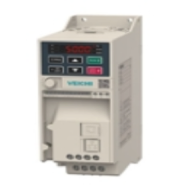
- Hybrid inverter: the heart of the system, converts DC to 220/380 V and manages the battery. We ship Veichi SISV or Deye SUN-K depending on the task.
- LiFePO4 battery: storage for night consumption and blackout reserve. Pylon US3000C, Deye SE-G5.1 Pro, Volts.
- Mounting system: aluminum profiles and clamps for your roofing. We pick this together with the panels.
- Cables and protection: MC4 connectors, DC breakers, DC isolator. The small parts without which the system does not start.