

Skip to content
Selection by parameters

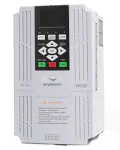
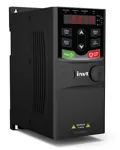
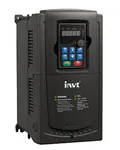
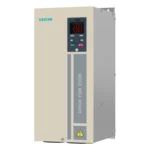
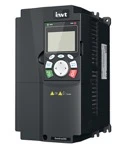
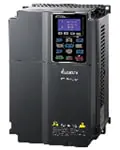
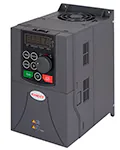
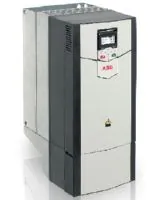
VFDs 75 kW

Found 183 goods
75 ×
Скинути фільтри
B2B Сервіс

Solar panels for home — where to start

A typical 100-200 m² house needs a 5-10 kW system. That is 10-20 panels rated at 500-600 W each, covering 25-50 m² of roof space. Budget for the panels alone runs 40,000 to 90,000 UAH — inverter and batteries extra.

Those numbers mean little until you answer three questions: how much electricity your house actually uses, what your roof looks like (area, pitch, orientation), and what you want from the system — full off-grid capability or just lower bills.

We have been selling and assembling solar systems since 2019. We have seen projects that worked perfectly and mistakes where people overpaid for excess capacity or, the other way around, skimped on panels and could not cover winter loads. This guide is a collection of practical advice from real installations.

Solar panel types and what actually matters

Monocrystalline panels are the standard for residential use in 2026. They deliver 21-23% efficiency, are compact, handle heat well, and outperform polycrystalline in diffuse light. 95% of our customers go mono.

Monocrystalline vs polycrystalline

Polycrystalline panels cost 10-15% less but lose on efficiency. Their rating sits at 17-19%. In practice, you need more panels for the same output — which means more roof space. If the roof is large and the budget tight, poly still makes sense. But honestly, the market is moving away from them.

PERC, TOPCon, HJT technology

  • PERC — the most common. An extra layer on the back of the cell adds 1-1.5% efficiency. Most 400-500 W panels are built on PERC.
  • TOPCon — next generation. 23-24.5% efficiency. Lower annual degradation (0.35% instead of 0.5%). Costs 10-20% more than PERC but pays back through higher yield.
  • HJT (heterojunction) — the most expensive technology. Up to 25% efficiency. Performs best at high temperatures. For Ukraine, where rooftops hit 60-70°C in summer, this is a real advantage — HJT loses only 0.26%/°C versus 0.35% for PERC.

Our recommendation: for most homes, TOPCon offers the best price-to-performance ratio. HJT is worth it if the budget allows and you are planning for 25+ years.

Panel wattage: 400, 500, or 600 W

500 W panels hit the sweet spot for residential installations. Fewer panels on the roof, fewer connectors, simpler mounting. A 5 kW system needs just 10 units instead of 12-13 at 400 W.

Parameter400 W500 W600 W
Size (mm)1722 x 11342094 x 11342172 x 1303
Weight (kg)21-2226-2832-35
Panels per 5 kW12-13108-9
Roof area per 5 kW (m²)~25~24~25
Price per W (UAH)6.5-86-7.57-9

600 W panels make sense for large commercial roofs. For a private house they are often too heavy and oversized — not every roof structure can handle them, and carrying them up is harder too. See our detailed comparison of 400 vs 500 vs 600 W panels.

400 W panels suit small roofs with complex geometry where large modules simply will not fit. Meanwhile, 500 W panels are what we install in 8 out of 10 projects.

How to calculate panel count for your house

A quick method: take your annual electricity bill, divide by 12 (average monthly consumption), and multiply by 1.3 (margin). Example:

  1. Average bill — 2,500 UAH/month, tariff 4.32 UAH/kWh → consumption ~580 kWh/month
  2. 580 x 1.3 = 754 kWh — target generation
  3. 1 kW of panels in Ukraine produces ~100-130 kWh/month (annual average)
  4. 754 / 115 ≈ 6.6 kW — required system size
  5. 6,600 / 500 = ~13 panels at 500 W

This calculation is a rough guide. Actual output depends on region (more in the south), roof orientation (ideal is south-facing, 30-35° pitch), and shading from trees or adjacent buildings. For precise figures we use PVsyst software — reach out and we will run the numbers for free.

Inverter and batteries — what else you need

Panels produce DC power. To run household appliances you need an inverter that converts DC to 220V AC. For a home system with backup capability we recommend a hybrid inverter — it works from grid, panels, and batteries simultaneously.

  • Grid-tie inverter — the cheapest option. Only works when the grid is up. Power goes out, inverter shuts down too. Fine if your grid is stable and the main goal is cutting bills.
  • Hybrid inverter — costs 30-50% more but provides autonomy. Switches to batteries in 10-20 ms during outages. For most Ukrainian homes, this is the best choice given the rolling blackout situation.
  • Batteries — LiFePO4 is the standard. Service life is 6,000+ cycles (15-20 years). For one day of autonomy with 15-20 kWh daily consumption you need a 10-15 kWh battery. Prices start from 25,000 UAH for 5 kWh. Full battery guide in our LiFePO4 article.

What to check before buying

Not all panels are equal, even when specs look similar. Here is what to verify before ordering:

  • Manufacturer warranty — at least 12 years on materials and 25 years on performance (no less than 80% of rated output). If a manufacturer offers less, walk away.
  • Tier 1 rating — Bloomberg publishes an annual Tier 1 manufacturer list. It is not directly about quality but financial stability — meaning the warranty will actually be honoured.
  • Temperature coefficient — matters for Ukraine. The lower (closer to -0.25%/°C), the less power the panel loses in heat. PERC is typically -0.35%, TOPCon -0.30%, HJT -0.26%.
  • Certification — IEC 61215 (safety) and IEC 61730 (electrical). Without them you are gambling.
  • Wind and snow load — for Ukraine you need at least 2,400 Pa (snow) and 4,000 Pa (wind). Most quality panels handle this, but check the datasheet.

One more tip from experience: do not chase the cheapest option. The gap between a budget and a quality panel is 15-20%, but the difference in output over 25 years is 20-30%. The math is straightforward.

Frequently Asked Questions

How much does a full solar panel kit cost for a house?

A complete 5 kW kit (10 x 500 W panels + hybrid inverter + 10 kWh battery) runs 150,000 — 220,000 UAH. The panels themselves account for roughly 30-35% of the total. The rest goes to the inverter, battery, cabling, and installation.

Do solar panels work in winter?

Yes, but output drops 60-70% compared to summer. In December-January, a 5 kW system in central Ukraine generates 150-200 kWh versus 600-700 kWh in June. That is why systems are sized with a margin or paired with battery storage.

What is the payback period for solar panels in Ukraine?

At current tariffs (4.32 UAH/kWh) with a feed-in tariff — 4-6 years for a grid-tied system. An off-grid system with batteries takes longer (7-10 years), but it provides energy independence that is hard to put a price on.

Do I need a permit to install solar panels?

For systems up to 30 kW on a private house, no special permit is required. However, to connect to the feed-in tariff you need a contract with your regional energy company and a bidirectional meter. The process takes 2-4 weeks.

How long do solar panels last?

Quality panels last 30-35 years. The manufacturer warranty typically covers 25 years at 80%+ output. Real-world degradation runs 0.3-0.5% per year, meaning after 25 years the panel still delivers 85-92% of its original rating.

Summary and next steps

For a typical home with a 2,000-3,000 UAH/month electricity bill, a 5-8 kW system fits the bill. That is 10-16 500 W panels, a hybrid inverter, and a 10 kWh battery. Go with TOPCon or PERC from Tier 1 manufacturers — do not cut corners on quality because this is a 25+ year investment.

Browse our solar panel catalog for homes to compare models by wattage, price, and technology. If you need help with calculations, leave a request and we will put together the right configuration for your house and budget.

Frequently Asked Questions

What tasks require a 75 kW VFD?

75 kW VFDs are used for powerful pumping stations, industrial compressors, crushers, large ventilation systems, and rolling mill drives. This is equipment for heavy industry.

Is special approval from the power utility needed for a 75 kW VFD?

At 75 kW, we recommend coordinating the connection with your power utility. Inrush current with a VFD is minimal, but total consumption requires appropriate technical conditions.

How much does a 75 kW VFD weigh and how is it mounted?

75 kW VFDs weigh from 45 to 80 kg depending on the brand. Installation is done in a dedicated enclosure or wall-mounted with reinforced brackets. Prices from 92 779 UAH.