

16 kWh at 51.2 V works out to about 314 Ah
First thing worth knowing about this class: lithium never gives you a round «16». A pack is 16 cells at 3.2 V, which makes 51.2 V, and from there cell capacity decides the rest. A 314 Ah cell gives 16.08 kWh. A 300 Ah cell gives 15.36. Felicity rates its LPBF48300 at 15.00 kWh. All of these get searched for with the same phrase, «16 kWh battery», so we keep the four figures on one page instead of splitting them across separate URLs.
Two different builds under the same capacity
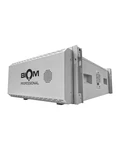
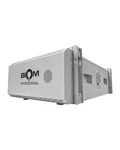
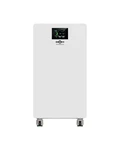
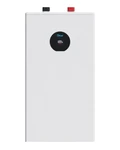
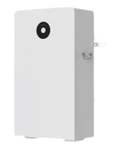
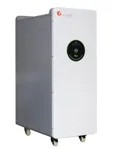
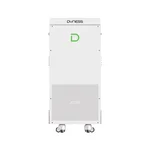
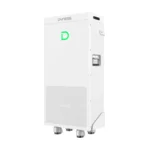
Monoblock with the board inside: that is Deye RW-F16 and SE-F16-C. BIOM BALFP-512314-V2 is built the same way. The inverter sees them over CAN or RS485 and holds the charge limits itself. The BIOM HV modules work differently. BAHV-314512-LFP at 16.08 and BAHV-300512-LFP at 15.36 are run by an external Biom Professional CB-HV-160 unit over CAN 2.0. That unit is not in the box. Worth pausing here: order an HV module as if it were a standard one and nothing will manage the pack.
What it takes on charge and what it weighs
Charge current across this selection runs from 140 to 160 A. RW-F16 and SE-F16-C hold 160 A. So does BAHV-314512-LFP. BALFP-512314-V2 is rated at 150 A, BAHV-300512-LFP at 140 A. Most are rated for 6000 cycles, and there is one exception here: the manufacturer rates BALFP-512314-V2 at 8000. Weight runs from 109 to 122.5 kg. That means floor or rack mounting. Nobody hangs a module like this on a wall, and we suggest looking at the space for it before ordering rather than after delivery.
One 16 kWh module or three 5 kWh ones
Per kWh it comes out roughly the same, so the difference lies elsewhere. One large module means one connection point and one BMS for the whole pack, so fewer chances of building a mismatched array. Three 5.12 kWh units are easier to carry in: 44-47 kg each against 109-122. They can also be bought in stages. We tend to suggest the large module when the space is there and the system is built for full backup from the start, and a set of 5 kWh units when the budget is split across several rounds.
What people order most
| Model | Capacity | Charge current | BMS | Cycles | Weight |
|---|---|---|---|---|---|
| Deye RW-F16 | 16 kWh | 160 A | built-in, CAN + RS485 | 6000 | 122 kg |
| Deye SE-F16-C | 16 kWh | 160 A | built-in, CAN + RS485 | 6000 | 109 kg |
| BIOM BALFP-512314-V2 | 16.08 kWh | 150 A | JK Smart Active, CAN / RS485, Bluetooth | 8000 | 122 kg |
| BIOM BAHV-314512-LFP | 16.08 kWh | 160 A | external CB-HV-160, CAN 2.0 | 6000 | 122.5 kg |
| BIOM BAHV-300512-LFP | 15.36 kWh | 140 A | external CB-HV-160, CAN 2.0 | 6000 | 122.5 kg |
This selection also holds Felicity LPBF48300 at 15.00 kWh. Neither charge current nor weight nor dimensions appear in the manufacturer datasheet, so we leave it out of the table: we are not going to invent the figures, and once Felicity publishes them we will add the row. Two Dyness modules at 16.08, PowerBrick-Max and PowerBrick-Plus, come to order.
If 16 kWh is not the right size
Below it people take the 5 kWh battery, the most common size in this category. Intermediate and larger sizes sit next door: 11.8, 17.5 and 25 kWh. The full list is in the battery catalogue, all of the chemistry under LiFePO4. By brand: Deye, Felicity, Dyness. For an inverter you already own there is batteries for inverters, and for a solar array batteries for solar panels. The inverters themselves live under hybrid inverters.
We wrote up how to size capacity against your own load in home battery capacity calculation. Wiring for several modules sits in series and parallel. What the management board actually does is covered in BMS for LiFePO4, and what affects cycle life in LiFePO4 service life.
Warranty and support
24-month warranty, delivery across Ukraine. A 16 kWh module weighs over a hundred kilograms. We agree delivery and carry-in separately, up front. Not sure whether your inverter will take 160 A of charge current, or whether its firmware knows this pack? Send us the inverter model and we will check before you pay.