Photoelectric sensor: which type for a conveyor, and which for product counting
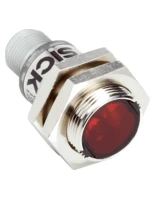
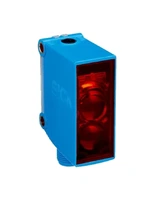
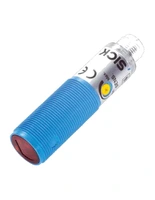
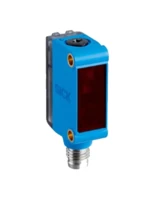
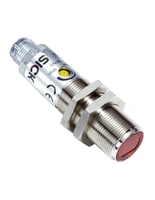
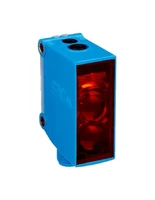
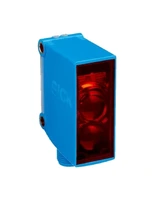
We install photoelectric sensors where you need to detect an object without contact and the material does not have to be metal. The three popular types. Diffuse (reflects off the object itself): cheapest, we ship them for short distances 50-200 mm; a typical customer of ours is a bottle filling line where the sensor counts passes. Through-beam (emitter plus receiver): for long distances 1-30 m and harsh conditions (dust, splash), we install them on warehouse racking. Retro-reflective (with a reflector): a compromise, range 0.5-15 m, used on automatic gate openers.
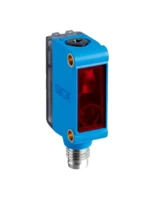
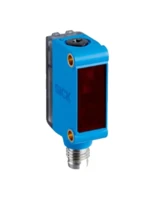
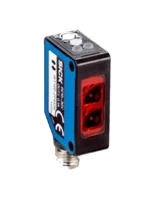
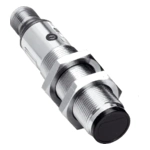
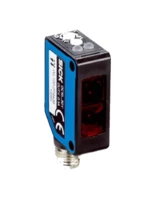
The two top sellers in our stock. Omron E3F-DS30B4 (diffuse 30 mm, IP67, 2-wire DC, price 700-1200 UAH): our bestseller from actual sales. Autonics BS5-T2M (through-beam, 5 m range, NPN/PNP): Korean budget pick. For tougher cases (clear bottles, glass) we ship Sick W4S-3 with background suppression, 4500-7500 UAH.
What we ask before the order: distance, target, environment
One: is the object transparent (bottles, film). If yes, a diffuse sensor will miss it, you need a retro-reflective with polarization (Sick WL12G or Omron E3Z-LL). Two: any shiny surfaces (oily metal). Then you need background suppression, otherwise the back-wall reflection triggers before the object does. Three: environment. Dust, washdown, aggressive vapors: IP67 minimum; food-grade is IP69K (Omron E3ZM stainless series). Outputs: NPN for Mitsubishi and Japanese PLCs, PNP for European Siemens or Schneider.
We keep four main brands in stock: Autonics (Korea, budget, 200+ models), Omron (Japan, the industrial workhorse), Sick (Germany, tough cases plus background suppression), Pepperl+Fuchs (food-grade and ATEX hazardous zones). Manufacturer warranty 1-2 years, delivery from our Kyiv warehouse 1-3 days. Customers often order them with an encoder for conveyor position tracking.
| Model | Brand | Distance | Type | Application |
|---|---|---|---|---|
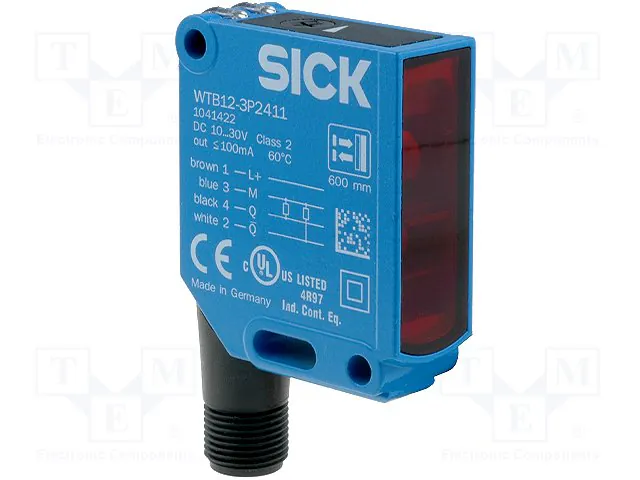
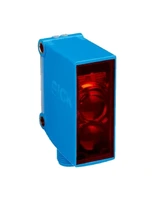
| WL14-2P430S02 | Sick | 40–1500 mm | Retroreflective | Conveyors, counting |
| FU6F | Keyence | 110–1100 mm | Fiber optic | Precise detection |
| S80-10M | Wenglor | 70–500 mm | Diffuse | Packaging lines |
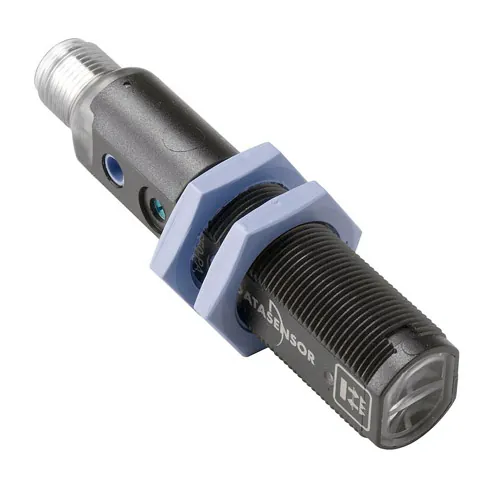
| S40PH5B03PH | Datasensor | 5–300 mm | Diffuse | Small object detection |
| OHDK14P5101S35A | Baumer | 20–350 mm | Diffuse, laser | Precision measurement |
Optical sensor manufacturers
The catalogue features optical sensors from leading global industrial automation manufacturers:
- Sick — German leader in photoelectric sensors, wide range from compact to industrial solutions
- Keyence — Japanese high-precision fiber optic sensors for complex detection tasks
- Wenglor — German sensors with excellent price/quality ratio, compact housings
- Datasensor — Italian photoelectric sensors for packaging and food industry
- Baumer — Swiss precision, laser distance sensors
- Pepperl+Fuchs — industrial sensors for hazardous areas and harsh conditions
Optical sensors by specifications
Select a sensor by key parameters: by operating distance (from 5 mm to 60 m for through-beam), by detection type (diffuse, retroreflective, through-beam, fiber optic), by protection rating (IP65, IP67, IP69K for food industry), by emitter type (infrared LED, red LED, laser). Browse the full sensor catalogue or use the filters on the page.
Warranty and support
All optical sensors come with a manufacturer warranty of 12 to 24 months. We provide technical consultation on selection, assistance with connection and configuration. Delivery across Ukraine: Kyiv, Kharkiv, Odesa, Dnipro, Lviv, and other cities. Payment: bank transfer with VAT, card, cash on delivery.