

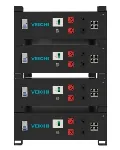
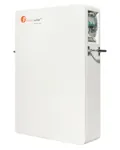
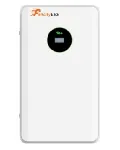
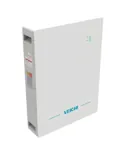
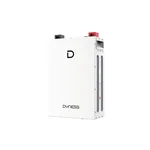
A 5.12 kWh module at 51.2 V: where home backup usually starts
5.12 kWh at 51.2 V works out to exactly 100 Ah. It is the most common battery-module format for a hybrid inverter, and 14 models in this selection share it. Capacity is the same across all of them. Price differs twofold, and there are three reasons for that. In order, below.
Where the BMS sits: inside, or as a separate unit
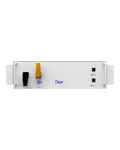
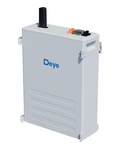
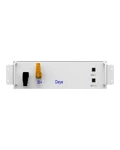
Check this first, because it changes what you have to order. On the Deye SE-G5.1-PRO (standard and version B) and SE-F5-PRO (L and C) the management board sits inside and brings out CAN and RS485. The inverter reads the pack over the bus and holds the charge limits itself. Same on BIOM BALFP-R512100-UNI and BALFP-512100-V1, which run JK Smart Active.
Deye BOS-G and BOS-G-PRO, though, are listed in the manufacturer datasheet as modules with no BMS of their own. They need an external unit. Same story with the BIOM HV module BAHV-100512-LFP, which a separate Biom Professional CB-HV-100 runs over CAN 2.0. Worth pausing here. Order one of these as if it were a standard module and the system will not start, because the controller is not in the box. We ask about this before you pay.
Charge current: 25 A or 100 A
Within the same 5.12 kWh, allowed charge current varies fourfold. Lowest is BOS-G at 25 A. Highest, at 100 A, covers both SE-F5-PRO units, BOS-G-PRO and the BIOM HV module. The rest sit in the middle at 50 A. The difference shows up in service rather than on paper: the higher the current, the faster the module refills during the window when the sun is up or the grid is back.
Mounting and weight
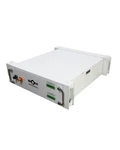
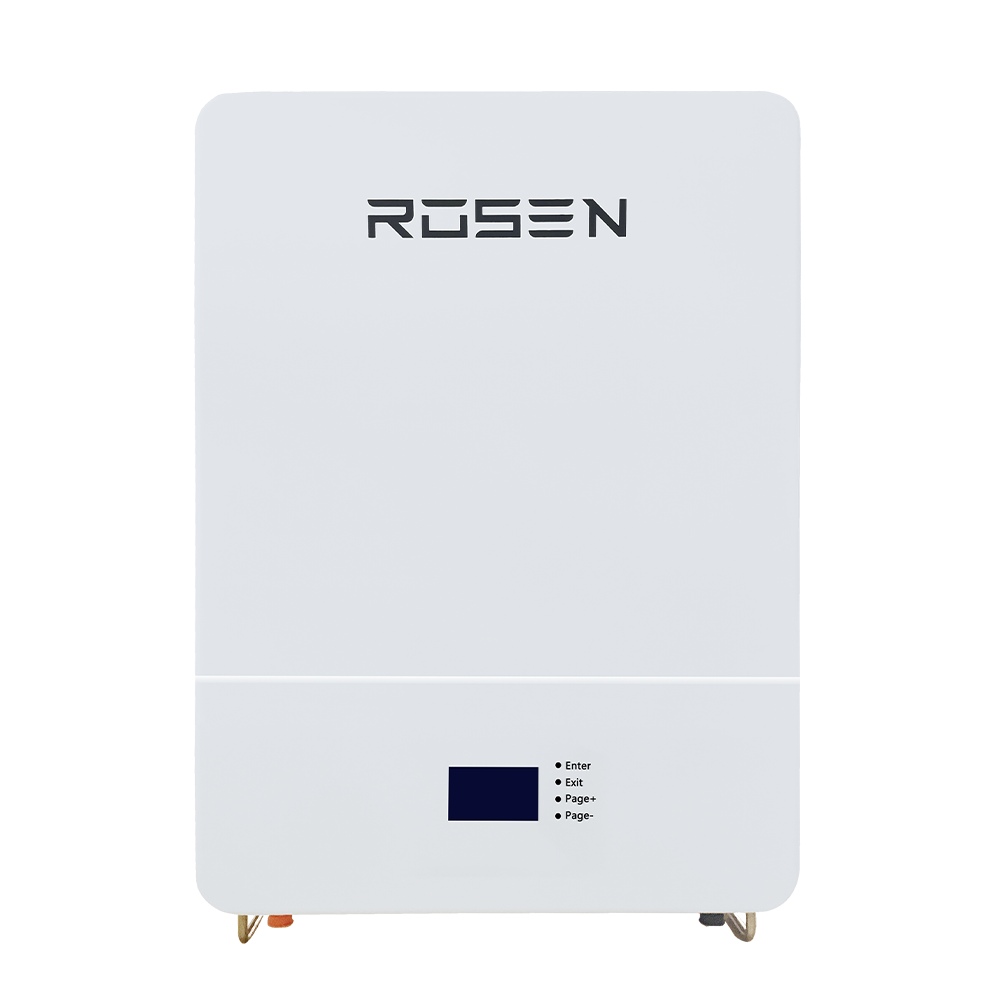
5.12 kWh modules weigh 43-47 kg. One exception: the rack-mount Rosen BAT-51.2V-100AH-RACK at 87 kg. Deye SE-G5.1-PRO and SE-G5.1-PRO-B come in a 440×133×540 mm form factor, so they fit a rack and a wall equally. BIOM BALFP-R512100-UNI (440×500×132 mm) is rated by the manufacturer for universal mounting. Veichi VCLB-5K-D01 (550×440×130 mm) and VCLB-5K-W01 (520×470×141.5 mm) are wall-mount.
What people order most
| Model | Capacity | Charge current | BMS | Cycles | Weight | Dimensions, mm |
|---|---|---|---|---|---|---|
| Deye SE-G5.1-PRO-B | 5.12 kWh | 50 A | built-in, CAN + RS485 | 6000 | 45 kg | 440×133×540 |
| Deye SE-F5-PRO-L | 5.12 kWh | 100 A | built-in, CAN + RS485 | 6000 | 44 kg | 404×547×141 |
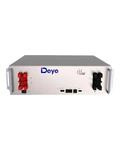
| BIOM BALFP-R512100-UNI | 5.12 kWh | 50 A | JK Smart Active, CAN / RS485 | 6000 | 43.7 kg | 440×500×132 |
| BIOM BALFP-512100-V1 | 5.12 kWh | 50 A | JK Smart Active, CAN / RS232 / RS485, Bluetooth | 6000 | 46.8 kg | 440×620×159 |
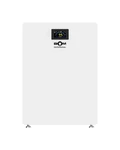
| Felicity LPBA48100-OL | 5.12 kWh | — | built-in | ≥6000 | — | — |
The dashes in the Felicity row are not a gap in our table. The figure is absent from the manufacturer datasheet, and we are not going to invent it: once Felicity publishes the data, we add it. Two more 5.12 kWh modules sit in this selection, Felicity LUX-E-48100LG04 and the rack-mount Rosen BAT-51.2V-100AH-RACK.
If 5.12 kWh is not enough
You either parallel more modules, or go straight to a larger one: 10.24, 11.8, 16 or 25 kWh. The full list sits in the battery catalogue and under LiFePO4. For a specific inverter see batteries for inverters, for a solar array batteries for solar panels. The inverters themselves live under hybrid inverters, including 5 kW models.
We wrote up how to size capacity against your own load in home battery capacity calculation. For which homes 5 kWh actually suits, there is a breakdown by house type. Wiring for several modules sits in series and parallel. What the management board does is covered in BMS for LiFePO4. Why 48 V and 51.2 V mean the same battery is written up in 48 V vs 51.2 V, and what affects cycle life in LiFePO4 service life.
Warranty and support
24-month warranty, delivery across Ukraine. The most common reason a freshly installed system does not see the pack is not a faulty module at all. It is an unconfigured data link between battery and inverter. We help with that. Not sure whether your inverter talks to a given module over CAN or RS485? Send us the inverter model and we will check before you pay.