
Skip to content
Filter
Selection by parameters
Number of poles
Type of coil voltage (AC - variable; DC - constant)

Contactors

Contactor for VFD

Safe power control for your VFD with a power contactor

Select a VFD

Contactors for Industrial Applications

Power contactors are the backbone of switching equipment at any industrial facility. They provide reliable switching of electrical circuits under load, operating for millions of cycles without degradation. The Chastotnik.ua catalog features contactors from leading global manufacturers: ABB, Schneider Electric, LS Electric, and other industrial automation brands.

What Is a Contactor and Where Is It Used

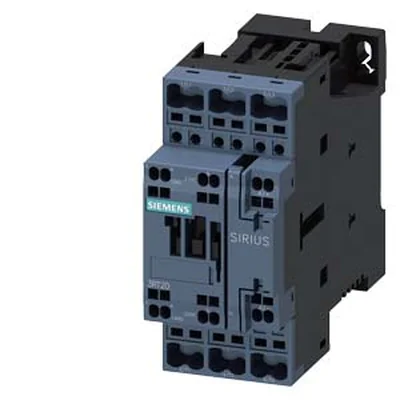
A contactor is an electromagnetic switching device designed for frequent switching of power electrical circuits under load. Unlike a circuit breaker, a contactor is rated for high-frequency operation — up to several thousand cycles per hour.

Key application areas for contactors:

  • Motor control — starting, stopping, and reversing induction motors in industrial drives, conveyor systems, and pumping stations
  • HVAC systems — switching compressors, fans, and heaters in heating, ventilation, and air conditioning systems
  • Pumping equipment — controlling centrifugal and submersible pumps, borehole equipment
  • Lighting systems — switching high-power lighting groups in production halls, warehouses, and stadiums
  • Capacitor banks — switching capacitor batteries for reactive power compensation
  • Heating equipment — switching electric furnaces, drying chambers, and industrial heaters

How to Choose a Contactor

Proper contactor selection determines the reliability and longevity of your electrical system. Key selection parameters:

Rated current and utilization category. Contactors are classified by categories: AC-1 (resistive or slightly inductive load), AC-3 (motor starting and stopping), and AC-4 (reversing and braking). For motors, always select a contactor rated for AC-3 with a 20–30% current margin.

Coil voltage. The coil supply voltage must match the control circuit: 24V AC/DC for PLC-based systems, 110V for industrial panels, 220V (most common) for general industrial applications, 380V for direct connection to the power network.

Number of poles. 3-pole contactors are the standard for three-phase motors. 4-pole contactors are used for switching three-phase circuits with neutral or in single-phase systems requiring double-break disconnection.

Auxiliary contacts. Most contactors feature front-mounted and side-mounted auxiliary contacts (NO — normally open, NC — normally closed). These are essential for signaling circuits, interlocking, and self-holding schemes.

Mounting. Modern contactors mount on 35 mm DIN rail, enabling fast installation in distribution boards and control cabinets.

Popular Contactor Brands

The Chastotnik.ua catalog features contactors from manufacturers with decades of experience in industrial switching:

ABB — the A-line series (A9…A300) for general industrial use and the AF series with electronic coil for wide voltage range operation. ABB contactors stand out for their compact dimensions and high reliability under intensive operation.

Schneider Electric — TeSys D and TeSys K ranges for different power levels. TeSys D is the industrial standard for motors up to 75 kW; TeSys K is a compact solution for light-duty applications up to 5.5 kW.

LS Electric — the MC series (MC-9a…MC-800a) covering a wide range of rated currents. LS contactors offer an optimal price-to-reliability ratio for industrial facilities.

Contactors for Use with Variable Frequency Drives

Contactors are frequently used alongside variable frequency drives (VFDs) in two primary configurations:

Input contactor (before the VFD). Installed between the circuit breaker and the VFD input. Provides safe power disconnection during emergencies or on command from the safety system. Mandatory in schemes requiring functional safety compliance (STO, SIL).

Bypass scheme (bypass contactor). Allows switching the motor to direct mains power if the VFD fails. Critically important for continuous processes — pumping stations, ventilation systems, and conveyor lines.

Important: installing a contactor on the VFD output for switching under load is not recommended — it may damage the inverter's output IGBT transistors. If output-side switching is required, the contactor must operate only at zero frequency with the motor stopped.

Why Buy from Chastotnik.ua

  • Genuine equipment — we work directly with authorized distributors of ABB, Schneider Electric, and LS Electric
  • Technical consultation — we help select the right contactor for your specific application, considering load category and control scheme
  • Complete supply — contactors, soft starters, variable frequency drives, sensors, and auxiliary equipment from a single supplier
  • Fast delivery — popular ratings from stock; custom orders from 5 business days
  • Manufacturer warranty — official warranty on all contactors with full documentation package

Frequently Asked Questions

What is the difference between a contactor and a circuit breaker?

A contactor is designed for frequent switching of electrical circuits under load (up to thousands of cycles per hour) and is controlled remotely via a coil. A circuit breaker is a protective device that opens the circuit during overload or short circuit. A contactor has no built-in protection, so it is always installed downstream of a circuit breaker.

How to select a contactor based on motor power?

To select a contactor, determine the motor rated current and utilization category (AC-3 for standard starting). The contactor AC-3 rated current should be 20–30% higher than the motor current. For example, a 7.5 kW motor (15A) requires an 18–22A AC-3 rated contactor. Contact our specialists for precise selection.

What is the most common contactor coil voltage?

The most common coil voltage is 220V AC, as it matches the standard mains supply. For PLC-based systems, 24V DC coils are used. Industrial panels may use 110V and 380V coils. The ABB AF series features an electronic coil with a universal voltage range.

Can a contactor be installed after a variable frequency drive?

Installing a contactor on the VFD output for switching under load is not recommended — it may damage the inverter IGBT transistors. If output-side switching is required, the contactor must operate only at zero frequency with the motor stopped, controlled accordingly by the VFD.

Which contactor brands are available in stock?

The Chastotnik.ua catalog features contactors from ABB (A, AF, AL series), Schneider Electric (TeSys D, TeSys K), and LS Electric (MC series). Popular ratings are available from stock. For specific models and large orders — delivery from 5 business days. Contact us to check availability.