What's Inside: The Chemistry of Three Technologies
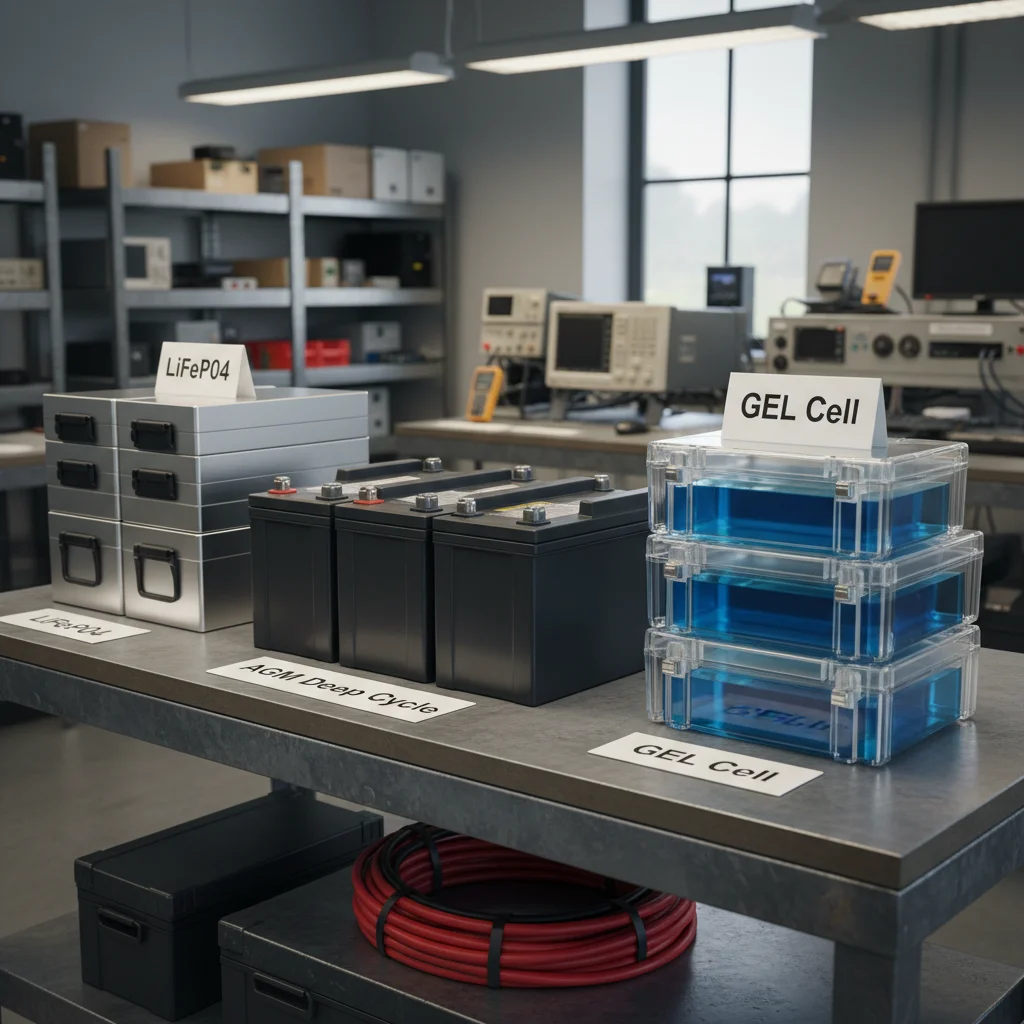
All three — lead-acid (AGM and GEL) and lithium iron phosphate (LiFePO4) — store electrical energy through electrochemical reactions, but they do it in fundamentally different ways. AGM (Absorbent Glass Mat) holds the electrolyte in a fibreglass separator, making the cell sealed and vibration-resistant. GEL thickens the electrolyte with silica gel, reducing sulphation and improving performance in heat. LiFePO4 uses lithium and an iron-phosphate cathode: no acid, no off-gassing, and a reaction that is far more thermally stable.
Comparison Table: Key Parameters
| Parameter | AGM | GEL | LiFePO4 |
|---|---|---|---|
| Cycle life (to 80 % capacity) | 300–500 | 500–800 | 3,000–6,000 |
| Depth of Discharge (DoD) | 50 % | 50–60 % | 80–100 % |
| Charge efficiency | 75–85 % | 75–85 % | 95–99 % |
| Operating temperature range | –20…+50 °C | –20…+50 °C | –10…+60 °C (charge from 0 °C) |
| Specific weight (kg/kWh) | 25–35 | 28–38 | 6–10 |
| Price (USD/kWh) | 80–120 | 100–150 | 180–280 |
Total Cost of Ownership Over 10 Years
With daily cycling, AGM must be replaced 4–6 times in 10 years; GEL, 3–4 times. LiFePO4 will in most cases last the full period on a single set. Example for a 5 kWh bank:
- AGM: 5 × $100 × 5 replacements = $2,500 + disposal
- GEL: 5 × $125 × 3.5 replacements = $2,190
- LiFePO4: 5 × $230 × 1 replacement = $1,150
LiFePO4 costs roughly half as much over a decade. That figure does not even account for energy lost to charge efficiency — 95–99 % vs 75–85 % for lead-acid chemistries.
When AGM or GEL Still Makes Sense
Do not write off lead-acid just yet. AGM wins where:
- Budget is tight. The upfront price is 2–3× lower than LiFePO4 for the same capacity.
- Temperatures drop below –10 °C. Charging LiFePO4 below freezing is unsafe — the BMS cuts charging. AGM and GEL operate from –20 °C.
- The battery is used infrequently. Monthly backup duty means AGM's cycle count drains slowly; payback period is longer but acceptable.
- No BMS management is available. Legacy UPS units and simple installations work fine with AGM without any additional battery management.
GEL retains an advantage in fixed telecoms cabinets and backup systems in hot climates thanks to lower off-gassing.
When LiFePO4 Is the Clear Winner
LiFePO4 pays off in any system with daily or intensive cycling:
- Solar solar panels + storage. One to two full cycles per day yields 10–15 years without replacement. Hybrid inverters are optimised to work with LiFePO4.
- UPS in server rooms or medical facilities. LiFePO4 is four times lighter — critical for rack mounting. Cycle life and efficiency have no competition.
- Mobile and portable systems. Camping, construction sites, mobile storage — wherever weight and compactness matter.
- Systems with battery banks above 10 kWh. Investment scale justifies the higher upfront cost through TCO savings.
Safety: Thermal Runaway Risk
Thermal runaway is the most discussed risk associated with lithium batteries. The key distinction: LiFePO4 is fundamentally different from Li-NMC or Li-Co chemistries used in smartphones and EVs. The iron-phosphate cathode is thermally stable up to 270 °C, while NMC begins degrading at 150–200 °C. Certified LiFePO4 cells with a quality BMS are not prone to ignition even under overload conditions. AGM and GEL, by contrast, emit hydrogen gas during overcharge — an explosive hazard requiring room ventilation. Conclusion: when correctly installed, LiFePO4 is safer than lead-acid alternatives.
Practical Recommendations
If you are building a solar system, connecting a hybrid inverter, or planning long-term backup power — choose LiFePO4. If your budget is strictly limited or the system operates rarely and in freezing conditions — AGM or GEL remain a sensible compromise. The key is to calculate cost per cycle, not sticker price. By that measure, lithium wins almost every time.