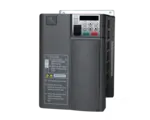
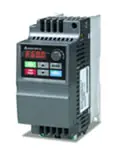
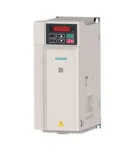
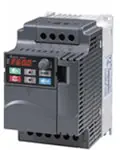
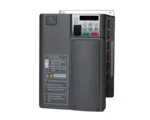
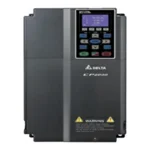
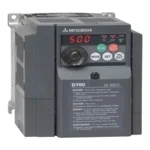
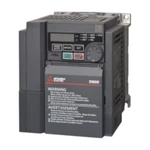
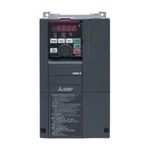
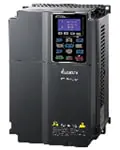
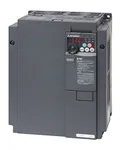
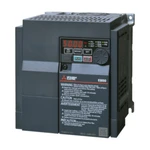
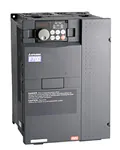
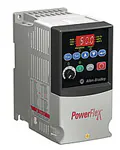
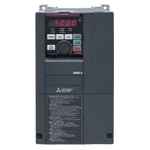
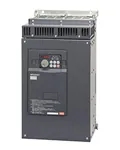
3.7 kW Variable Frequency Drives — Motor Control at the Small-to-Medium Power Boundary
The 3.7 kW power rating is a standard frame size across most VFD manufacturers and corresponds to motors widely used in industrial and utility equipment. Variable frequency drives (VFDs) at this rating typically operate on 3×380 V supply, deliver output current in the 8–10 A range, and provide soft start, precise speed control, and motor overload protection.
Applications for 3.7 kW VFDs
This power class covers a wide range of industrial tasks:
Water supply and irrigation pumps — reduced inrush current, pressure control via PID regulator.
Fans and exhaust systems — scalar U/f control enables significant energy savings at partial loads.
Conveyors and belt systems — smooth start and adjustable conveying speed without jerking.
Small compressors — stable pressure maintenance under variable load.
Mixers and agitators — precise RPM control for process requirements.
The chastotnik.ua catalog lists 13 models rated at 3.7 kW from leading manufacturers. Below is a comparison of key parameters based on real sales data:
Supply voltage: most models require 3×380 V. For single-phase 220 V connection, Danfoss VLT 2800 (195N0074) is the right choice.
Load type: for pumps and fans (quadratic torque load) scalar U/f control is sufficient; for conveyors and machine tools with dynamic loads, vector control is recommended — such as Mitsubishi FR-D740 or Delta VFD-E.
Communication interface: for SCADA or PLC integration, select models with Modbus RTU or RS-485.
Enclosure rating: all catalog models are rated IP20; for wet or dusty environments, mount inside a protective enclosure or consider 5.5 kW models with higher IP ratings.
All 3.7 kW VFDs in the chastotnik.ua catalog are supplied with official manufacturer warranty. Delivery across Ukraine via Nova Poshta. Cash on delivery or bank transfer for legal entities. Contact our technical team for selection guidance and connection support.
Frequently Asked Questions
How do I correctly size a VFD for a motor?
The key parameter is the motor's rated current in amps (from the nameplate), not kilowatts. The VFD's rated current must equal or exceed the motor current. Power in kW is a secondary guide: at the same rating, an older 6-pole motor draws more current than a modern 4-pole. For heavy-start loads (crushers, high-inertia belt conveyors, screw compressors) go one frame size up. For pumps and fans no margin is needed — torque drops quadratically with speed, so the VFD never sees overload during ramp-up.
What is the difference between a VFD and a soft starter?
A soft starter limits inrush current and removes mechanical jerk; once the motor is up to speed it is either bypassed or simply holds the motor at full voltage — it cannot vary speed during operation. A VFD does both smooth starting and speed control from zero to 400–600 Hz, plus PID control of pressure or flow. The choice is straightforward: if motor speed is always constant, use a soft starter (cheaper, smaller cabinet); if any speed adjustment is needed during operation, use a VFD.
Scalar (V/f) or vector (SVC/FOC) control: which one for which load?
Scalar V/f control maintains a fixed voltage-to-frequency ratio and works well for pumps and fans (quadratic torque M∝n²) where speed regulation accuracy under load is not critical. Sensorless vector (SVC) is needed when the motor drives a conveyor, extruder, or hoist: full torque is required from as low as 3–5 Hz with a stiff speed characteristic. Closed-loop FOC with an encoder gives ±0.01% speed accuracy — used in cutting lines, winding, and lifting equipment. Most series in the catalogue (Veichi AC10/AC310, INVT GD20) include both modes in one unit; pure scalar-only models are INVT GD10 and GD200A.
Can I run a three-phase 380 V motor from a single-phase 220 V supply using a VFD?
Yes, with one important note. A single-phase input produces a three-phase output at roughly 220 V, not 380 V — that is a physics constraint, not a device limitation. The motor will deliver approximately 60–70% of its rated power due to the lower voltage. If the motor is wound for star-connection at 220 V it will run at full power. Models in our catalogue with single-phase 220 V input and three-phase output: Veichi AC10-S2, Veichi AC01-S2, INVT GD10-S2, INVT GD20-S. To drive a 380 V three-phase motor from a single-phase supply you need either a step-up transformer or a VFD with a built-in boost stage.
Which VFD brands are available and what warranty is offered?
Over 1,720 models from 14 manufacturers in stock. Largest selections: Danfoss (225 SKUs: VLT FC102/FC202/FC302), Schneider Electric (218: Altivar 12/310/320/610/650/950), Siemens (182: Sinamics G120/G130), Bosch Rexroth (159: EFC/VFC 3610/5610), INVT (138: GD10/GD20/GD200A/GD350), ABB (123: ACS355/ACS580/ACS880), Veichi (123: AC01/AC10/AC310/AC70). By sales volume 2025–2026 Veichi AC10 and AC310 lead — primarily because of their price-to-feature ratio and available Ukrainian service centre. Warranty is 12 months on all series, 24 months on Veichi AC10/AC310 and INVT GD20.
What determines the price of a VFD?
Four factors. Power: price scales roughly linearly with kW. Control type: scalar VFDs cost 15–30% less than vector models at the same power. Features: built-in PLC, Profinet/EtherCAT interface, braking chopper, EMC filter, STO certificate — each option adds to the price. Brand: Japanese and European series (Mitsubishi FR, Siemens G120, Danfoss FC302) cost more than Asian brands at the same rating. Reference prices: budget 1.5 kW — from UAH 3,500; mid-range 5.5 kW — from UAH 9,000; industrial 37 kW with Profinet — from UAH 65,000.
When is a braking resistor or input reactor required?
A braking resistor is needed when the motor brakes frequently or decelerates a high-inertia load: hoists, centrifuges, cutting lines. During regenerative braking the VFD feeds energy back into the DC bus; without a resistor the bus voltage climbs until the OV protection trips. An input reactor (line choke) is recommended for drives 22 kW and above, or when powering from a generator: it reduces capacitor inrush peaks and cuts harmonic THDi from 80–120% down to 30–40%. On sites with sensitive equipment, fit both a reactor and an EMC filter together.
The VFD shows an E.OC fault (overcurrent) — what should I do?
First localize the source. Disconnect the motor from outputs U/V/W and run the drive with no load. If the fault clears, the problem is in the motor or cable (shorted turns, a damaged cable, a damp terminal box). If E.OC persists even without a motor, the output power module (IGBT) is damaged: measure resistance between the DC+/DC- bus terminals and outputs U, V, W — zero resistance confirms a breakdown. A special case for drives above 40 kW: dried-out thermal paste under the heatsink lets the module overheat locally within milliseconds, faster than the temperature sensor can react — inspection and re-pasting fixes it.
Can I set 300 V in the parameters to give the motor more power?
No. A VFD is neither a stabilizer nor a step-up transformer — its output will never exceed the voltage coming in. For 220 V-class drives the motor rated voltage (parameter F02.05 on Veichi) is kept within ~253 V: that is the ceiling of a 230 V +10% supply, above which you risk the DC-bus capacitors. If the motor really lacks torque at low speed, the answer is not «more voltage» but the correct control mode (vector SVC instead of scalar V/f) and torque boost — not inflating the voltage figure.
There is voltage on the motor or panel housing — is it dangerous and how do I remove it?
Yes — stray voltage on the housing is both a safety issue and the reason nearby electronics (scales, controllers, sensors) misbehave. First rule: the motor ground wire must go directly to the VFD PE terminal, not to a shared building bus — otherwise high-frequency PWM currents return through «earth» and induce a potential on the housings. If you measure more than 5 V between neutral «0» and protective earth, the grounding loops must be separated. Ground the shield of signal cables (4-20 mA sensors) at one end only — at the VFD side — otherwise the shield itself becomes an antenna.
Subscribe to our email newsletter for discounts
We use cookies for analytics and to improve the website. Privacy Policy