Why Gate Automation Needs 30 % Headroom, Not 20 %
Inrush current is the key difference between gate and barrier drives and static loads such as PLCs or cameras. When a gear-motor starts, it draws three to five times its running current: a drive rated at 2 A running will pull 6–10 A for 0.2–0.5 seconds at startup. The same applies to electromagnetic door locks and latches powered at 24 V DC.
By comparison, an automation panel with sensors and relays can work with 20–25 % headroom because its inrush is small. For gate drives the rule is different: the minimum margin is 30 %, and 40–50 % is the right target when the drive is heavy or the gate opens in freezing temperatures. A supply sized with no margin trips its overload protection at the first cold-weather start and takes the system offline.
Outdoor Environment: What Really Affects the Power Supply
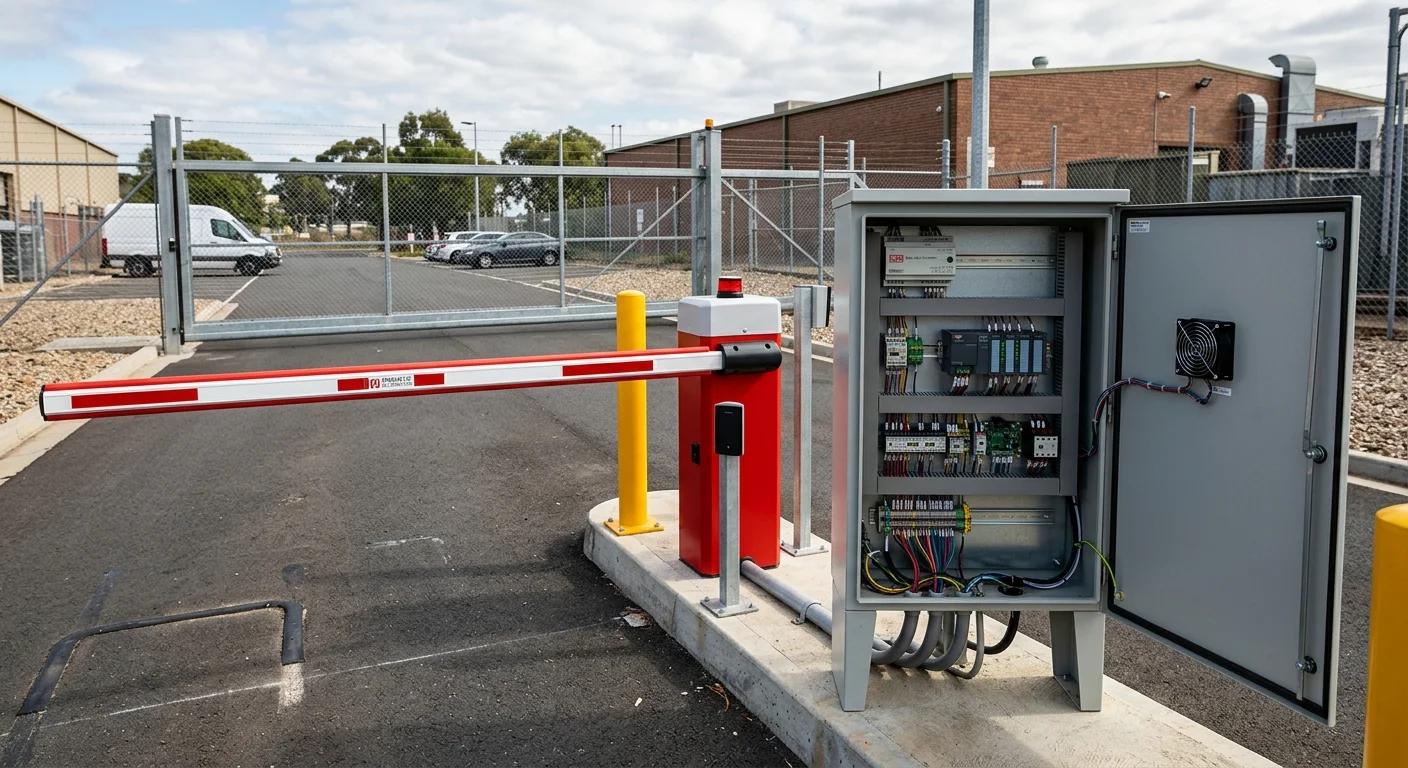
Gate automation lives not in a warm server room but in an outdoor cabinet or underground pit. Three primary threats:
- Frost. Most industrial power supplies are rated for −25...+70 °C. But at −20 °C, motor startup is harder (thicker gear oil), which increases inrush current. Cold air does help with cooling, but only if convection is not blocked.
- Heat and direct sun. A sealed metal cabinet in direct summer sun can reach +50...+60 °C internally. At those temperatures, most power supplies derate their output by 20–40 %. A 120 W supply at +60 °C delivers 70–80 W in practice. Factor that in when sizing.
- Moisture and condensation. Supply input terminals must be reliably protected from moisture. The outdoor cabinet must be IP54 or better. LRS and NDR models are IP20 and require a properly sealed enclosure — do not install them in open boxes without gaskets.
Model Comparison for Gate and Barrier Automation
| Model | Current, A | Power, W | Mounting | PFC | Notes |
|---|---|---|---|---|---|
| NDR-120-24 | 5.0 | 120 | DIN rail | No | Best value for barriers and roller shutters |
| LRS-150-24 | 6.5 | 156 | Enclosed | No | More headroom for heavy inrush |
| MDR-100-24 | 4.0 | 96 | DIN rail | Yes (active) | PFC, compact DIN footprint |
| NDR-240-24 | 10.0 | 240 | DIN rail | Yes (active) | Heavy industrial gates, sectional overhead doors |
Why an Economy Supply Sized Too Tightly Trips
An undersized economy supply is not just unreliable — it fails in a specific, repeatable way. Budget supply manufacturers specify "150 % peak overload" and assume users will never approach that limit in real operation. A gate gear-motor at startup easily produces 200–300 % of the system's running current. The protection circuit trips, the supply resets, and the gate or barrier stops mid-travel. The same thing happens again next time, particularly when a mechanical stop is slightly stiffer after an overnight frost.
A quality industrial supply with genuine 130–150 % overload capability and correctly sized current headroom handles these spikes without tripping. Popular choices for this application: NDR-120-24 and LRS-150-24 — genuine Mean Well products with warranty, shipped from stock.
Practical Selection Checklist
- Find the drive motor's rated running current from its datasheet or nameplate.
- Add the draw of all other loads in the cabinet (controller, position sensor, door lock solenoid).
- Sum the totals, then multiply by 1.4 (40 % margin for outdoor drives).
- If the cabinet reaches above +40 °C in summer, account for derating and add another 20 % margin.
- Select the next standard model size above the calculated value.
- Confirm the cabinet is rated IP54 or better for moisture and dust protection.
Related Articles and Product Pages
For a full power calculation guide including temperature correction factors, see How to Calculate Power Supply Wattage. For voltage selection between 12 V and 24 V for specific drives, see Which Voltage to Choose for a Power Supply. The full range is in the Industrial Power Supplies section; 24 V models are at 24V Power Supplies.
Send us your panel load list and we will recommend the right supply within one working day.