Hybrid Inverter 5 kW — Who It Suits and Which to Choose
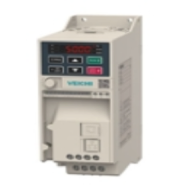
A 5 kW hybrid inverter is the most popular choice for a private home of 80–150 m² or a spacious apartment. It covers essential needs: refrigerator, lighting, heating pump, router, device charging — and can handle occasional use of a washing machine or water heater. The catalog features 5 models at 5 kW from Deye and Veichi — single-phase and three-phase, with different MPPT ranges and battery voltages.
Who Needs a 5 kW Inverter
Five kilowatts is the sweet spot between price and capability. Here is a guide:
- Home 80–120 m² with gas heating, LED lighting, standard appliances — 5 kW is more than enough
- Apartment with backup power — for blackout resilience (fridge + lights + internet + charging)
- Country house — full autonomy from 4–6 solar panels at 500 W each
Not sufficient if you have: electric heating, a 7+ kW electric stove, or a powerful whole-house air conditioner — in that case, consider 10 kW inverters.
Comparison of All 5 kW Models in the Catalog
We carry five 5 kW models. The differences are in grid type, battery voltage, and MPPT range:
| Model | Phases | Battery | MPPT Range | Efficiency | Protection | Best For |
|---|---|---|---|---|---|---|
| Deye SUN-5K-SG05LP1 | 1-ph/220V | 48V | 150–425V | 97.6% | IP65 | Single-phase home |
| Deye SUN-5K-SG04LP3 | 3-ph/380V | 48V | 200–850V | 97.0% | IP65 | Three-phase home, longer strings |
| Veichi VHS-5K-L01-K | 1-ph/220V | 48V | 60–550V | 97.6% | — | Silent operation, apartment |
| Veichi VHS-5K-30-H | 3-ph/380V | 450V | 100–550V | 97.6% | IP65 | Commercial, high-voltage battery |
| Veichi VHT-5K-25-H | 3-ph/380V | 750V | 120–950V | 98.2% | IP65 | Max efficiency, large panel array |
Quick Selection Guide
- Single-phase 220V + standard 48V battery → Deye SUN-5K-SG05LP1-EU — proven best-seller, compatible with most 48V LiFePO4 batteries
- Need silence → Veichi VHS-5K-L01-K — silent series, suitable for living spaces
- Three-phase 380V + maximum efficiency → Veichi VHT-5K-25-H — 98.2% efficiency, MPPT up to 950V for long strings
How Many Panels and What Battery to Connect
Solar Panels
For a 5 kW inverter, the optimal array is 3–4 kW (6–8 panels at 500 W each). The key is matching the MPPT range. For Deye SG05LP1 (150–425V), that is 4–8 panels per string. For Veichi VHT-5K (120–950V), you can build longer strings with 10+ panels.
If solar panels are not planned yet, the inverter will work as a UPS (charging the battery from the grid). Add panels later when ready.
Battery
The standard pair for a 5 kW inverter is a 5.12 kWh LiFePO4 battery (51.2V). This provides 5–8 hours of backup for basic home needs. For full overnight autonomy, add a second module — Deye SG05LP1 supports up to 8 parallel batteries.
For Veichi VHS-5K-30-H (450V battery) and VHT-5K-25-H (750V), specialized high-voltage modules are required — verify compatibility when ordering.
Installation Considerations
- Location — IP65-rated models can be mounted outdoors under a canopy. Veichi L01-K (no IP65) — indoor only
- Ventilation — maintain 30+ cm clearance on all sides for cooling
- Grounding — mandatory for the inverter, panels, and battery rack
- Circuit breakers — on both AC and DC sides per model instructions
- Wi-Fi/Ethernet — connect monitoring to track generation and consumption from your smartphone
5 kW vs 3 kW vs 6 kW — Should You Size Up
The classic dilemma: save with 3 kW or get 6 kW for headroom?
| Parameter | 3 kW | 5 kW | 6 kW |
|---|---|---|---|
| Max continuous load | 2,400 W | 4,000 W | 4,800 W |
| Kettle + washer simultaneously | No | Borderline | Yes |
| 12 BTU air conditioner | Possible but tight | Comfortable | Comfortable |
| Panel array | 2–3 kW | 3–4 kW | 4–5 kW |
| Best for | Apartment, minimum | Home 80–150 m² | Home with headroom |
The price difference between 5 and 6 kW is 10–15%. If the budget allows — go with 6 kW. If the home is compact with no heavy loads — 5 kW is sufficient.
Frequently Asked Questions
Is a 5 kW inverter enough for a home with air conditioning?
Yes, if the AC unit is inverter-type (consuming 800–1,500 W). It runs comfortably alongside a refrigerator, lighting, and other appliances. An older on/off AC with 3,000+ W startup current may cause overload — consider 6–8 kW instead.
How many hours of backup does a 5 kWh battery provide with a 5 kW inverter?
Depends on the load. At average consumption of 500–700 W (fridge + lights + router + pump), a 5.12 kWh battery provides 7–10 hours. At full 4,000 W load — about 1 hour. A realistic overnight blackout scenario: 6–8 hours.
Is Deye SUN-5K-SG05LP1 compatible with any battery?
The inverter works with LiFePO4 batteries at 40–60V (48V nominal). Most rack-mount and wall-mount 48V modules from various manufacturers are compatible. BMS communication is via CAN or RS485. Verify the communication protocol before purchasing.
Can I expand from 5 kW to 10 kW later?
You cannot directly upgrade a single inverter — the power rating is fixed. However, you can install a second 5 kW inverter in parallel (Deye supports parallel operation) or replace it with a higher-rated model. Batteries and panels transfer without issues.
Where is the best place to install a hybrid inverter at home?
The ideal location is a utility room, garage, or boiler room with good ventilation. IP65-rated models can be mounted outdoors under a canopy. Avoid direct sunlight on the unit (overheating reduces efficiency) and damp basements. Keep at least 3 meters from bedrooms (the cooling fan produces 35–45 dB background noise).
Browse the full 5 kW hybrid inverter catalog or select a different power rating in the hybrid inverters section. For a step-by-step system selection guide, contact our engineers.