



400 kW Variable Frequency Drives — Controlling Heavy Industrial Motors
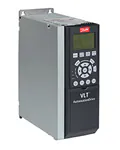
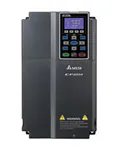
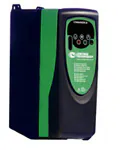
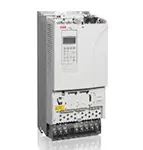
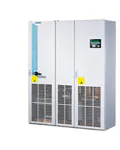
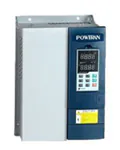
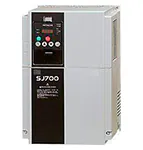
Variable frequency drives (VFDs) rated at 400 kW are designed for controlling large asynchronous motors in heavy industry. Unlike low- and medium-power VFDs, the 400 kW class is applied where uncontrolled direct-on-line starting is unacceptable due to mechanical shock, grid overload, or excessive energy consumption. The full VFD catalogue covers ratings from 0.4 kW to 710 kW.
Typical Applications for 400 kW VFDs
Drives in this power class are typically installed on high-load, long-duty-cycle applications:
- Pumping stations and water supply — primary and booster pumps at large municipal, industrial, or oil-refining facilities. Speed regulation reduces energy consumption by 30–50% compared to throttling.
- Compressor systems — screw and centrifugal compressors in chemical, petrochemical, and metallurgical industries. Soft start eliminates water hammer and extends equipment life.
- Large-scale HVAC and ventilation — mine ventilation, industrial exhaust systems, process cooling. Energy savings come from the cubic relationship between fan speed and power consumption.
- Conveyors and material handling — belt conveyors in mining, port cranes, overhead travelling cranes and hoists.
- Crushers, mills, and mixers — constant-torque loads in cement, mining, and chemical production.
400 kW VFD Models in Stock
Two models are currently available at 400 kW, offering different control approaches and built-in features:
| Model | Brand / Series | Rated current | Max. freq. | Built-in PLC | EMC filter | IP |
|---|---|---|---|---|---|---|
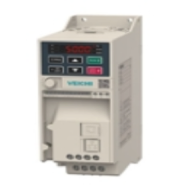
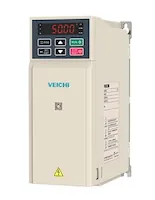
| AC310-T3-400G/450P-L | Veichi AC310 | 750 A (G) / 800 A (P) | 600 Hz | Yes | Option | IP20 |
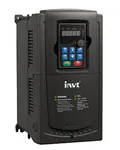
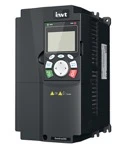
| GD200A-400G-4 | INVT GD200A | 720 A | 400 Hz | No | Built-in | IP20 |
The G/P suffix in the Veichi AC310 model denotes G — constant torque (compressors, cranes, conveyors) and P — variable torque / fan-pump mode (rated up to 450 kW at lower torque demand). Both models accept 3×380 V, 50/60 Hz input.
How to Select a 400 kW VFD
When specifying a drive for a 400 kW motor, the following factors are decisive:
- Load type: constant torque (G-rated, heavy-start drives) vs variable torque (P-rated, pumps and fans). For constant torque applications, match the drive to the motor's rated current, not rated power.
- Maximum output frequency: 400 Hz covers the majority of applications; the 600 Hz ceiling of the Veichi AC310 enables spindle drive use cases or applications requiring elevated rotor speed.
- Built-in PLC requirement: the Veichi AC310 includes an onboard PLC for standalone control logic, eliminating a separate controller; the INVT GD200A is designed for integration with SCADA or a higher-level automation system.
- EMC filter: the INVT GD200A ships with an integral EMC filter, important where sensitive equipment operates nearby; the Veichi AC310 filter is available as an option.
Other Power Ratings
For adjacent power classes, see the following catalogue pages:
- 315 kW VFDs — 6 models in catalogue
- 350 kW VFDs — 3 models
- 500 kW VFDs — 1 model
- 250 kW VFDs — 7 models
Warranty and Support
All 400 kW VFDs come with the manufacturer's official warranty. Free technical consultation on drive selection and motor pairing is available. Delivery across Ukraine by Nova Poshta or freight carrier by arrangement. Oversized items can be collected. Payment by cash, bank transfer (FOP, LLC, invoice).