Why You Need a 10 kW Hybrid Inverter
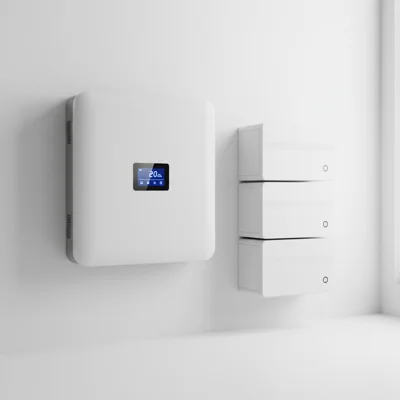
A 10 kW hybrid inverter is the heart of a modern residential or commercial energy system, combining solar panels, battery storage, and grid power into a unified complex. Unlike standard grid-tied inverters, a hybrid model operates in three modes: solar, battery, and grid — switching automatically between them in milliseconds.
For Ukrainian households, this power class is especially relevant. A house of 150-300 m² with electric heating, air conditioning, appliances, and a workshop consumes 6 to 12 kW at peak. A 10 kW hybrid inverter covers these needs with headroom, ensuring stable operation even during scheduled power outages.
What Can a 10 kW Inverter Power Simultaneously
Understanding the real capabilities helps you plan your energy system correctly. Here is a typical calculation for a private home:
| Appliance | Power, W | Quantity | Total, W |
|---|---|---|---|
| Refrigerator | 150 | 1 | 150 |
| Air Conditioner (inverter type) | 1,200 | 2 | 2,400 |
| Electric Water Heater | 2,000 | 1 | 2,000 |
| Washing Machine / Dishwasher | 2,200 | 1 | 2,200 |
| LED Lighting | 10 | 20 | 200 |
| Computer + Monitor | 400 | 2 | 800 |
| Circulation Pump | 100 | 2 | 200 |
| Power Tools | 1,500 | 1 | 1,500 |
| Total: | 9,450 W | ||
As we can see, 10 kW is sufficient to run virtually all equipment in a house simultaneously. For a small business — a coffee shop, barber shop, small store, or office — this capacity is also adequate for uninterrupted operation.
Comparison of 10 kW Hybrid Inverter Models
At chastotnik.ua, we offer models from trusted manufacturers. Let us review the key specifications:
| Model | Power | Phases | Battery | Max DC | MPPT Range | Efficiency | Price, UAH |
|---|---|---|---|---|---|---|---|
| Veichi SISV-10.2K-H | 10.2 kW | 1-ph | 48 V | 500 V | 60-450 V | 98.0% | 29,500 |
| Deye SUN-10K-SG04LP3 | 10.0 kW | 1-ph | 48 V | 550 V | 200-850 V | 97.0% | 90,700 |
| Veichi VHT-10K-25-H | 10.0 kW | 3-ph | 750 V (HV) | 1000 V | 200-950 V | 98.1% | 155,034 |
| Veichi VHT-10K-40-H | 10.0 kW | 3-ph | 750 V (HV) | 1000 V | 200-950 V | 98.4% | 203,037 |
Veichi SISV-10.2K-H — Best Price-to-Power Ratio
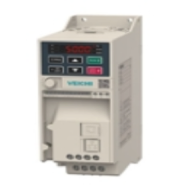
The single-phase Veichi SI series hybrid inverter at 10.2 kW is a budget solution for private homes. It works with 48 V lithium-ion batteries and supports RS232, RS485, Wi-Fi, and GPRS monitoring. With 98% efficiency, energy conversion losses are minimal. Starting at UAH 29,500, this is one of the most affordable options on the market.
Deye SUN-10K-SG04LP3 — Proven Brand for Ukrainian Conditions
Deye is one of the most popular hybrid inverter brands in Ukraine. The SUN-10K model works with 48 V batteries and supports a wide MPPT range (200-850 V), allowing longer strings of solar panels. Reliable construction and an extensive service network make Deye the choice for those who value stability.
Veichi VHT Series — Three-Phase Solutions for Business
Three-phase Veichi VHT models with high-voltage 750 V batteries are designed for commercial installations. Up to 98.4% efficiency, IP65 protection, and MPPT range up to 950 V represent industrial-grade equipment. The VHT-10K-40-H variant with increased charging current (40 A) fills the battery bank faster.
Battery Selection for a 10 kW Inverter
Choosing the right battery storage determines how many hours your home can operate autonomously. For a 10 kW inverter, we recommend:
| Mode | Battery Capacity | Autonomy Time* | Cost from, UAH |
|---|---|---|---|
| Minimum (lighting, fridge, chargers) | 5 kWh | 4-6 hours | 60,000 |
| Basic (+ computers, pumps, TV) | 10 kWh | 4-5 hours | 89,000 |
| Comfort (+ water heater, AC) | 15-20 kWh | 3-5 hours | 150,000 - 195,000 |
| Full autonomy (entire house) | 25+ kWh | 5-8 hours | from 195,000 |
* At average consumption of 2-3 kWh
We recommend LiFePO4 batteries (detailed guide) with 51.2 V voltage for single-phase systems. They provide 6,000+ charge-discharge cycles and safe operation from -20 to +60 °C.
ROI Calculation for a 10 kW Hybrid Inverter System
Let us consider a typical scenario for a private home in Ukraine:
- Inverter: Veichi SISV-10.2K-H — UAH 29,500
- Solar panels: 10 kW (20 pcs. at 550 W) — ~UAH 100,000
- Batteries: 10 kWh — UAH 89,000
- Installation and accessories: ~UAH 40,000
- Total cost: ~UAH 258,500
Savings and Revenue
A 10 kW solar power plant in Ukraine generates an average of 10,000-12,000 kWh per year. At a tariff of UAH 4.32/kWh (with VAT, 2026) and 70% self-consumption:
- Electricity savings: ~7,000 kWh x UAH 4.32 = UAH 30,240/year
- Surplus sales at green tariff: ~3,000 kWh x UAH 3.36 = UAH 10,080/year
- Total benefit: ~UAH 40,320/year
- Payback period: 6-7 years
Additionally consider: no losses from blackouts (critical for business), rising electricity tariffs, and potential extension of the green tariff programme.
Single-Phase or Three-Phase: How to Choose
The choice between single-phase and three-phase inverters depends on your grid connection:
- Single-phase (220 V) — most private homes. Veichi SISV and Deye SUN-10K models are ideal. Simpler installation, lower cost.
- Three-phase (380 V) — homes with high-power equipment (electric boiler, sauna, workshop) or commercial premises. The Veichi VHT series ensures balanced load distribution across phases.
If you currently have single-phase power but plan to upgrade to three-phase, consider installing a three-phase inverter straightaway with the corresponding grid upgrade.
Installation and Connection: What You Need to Know
Space Requirements
- Well-ventilated location (preferably not in direct sunlight)
- Minimum 50 cm clearance around the inverter
- Temperature from -20 to +60 °C (for IP65-rated models)
- Proper grounding in compliance with electrical codes
Typical Connection Diagram
Solar panels are connected in strings to the inverter's MPPT inputs. Batteries connect through a BMS (Battery Management System). The inverter links to the main distribution board via protection circuit breakers and a meter.
Important: installation must be performed by a certified electrician experienced with solar power systems. Incorrect connection can damage equipment and void the warranty.
Advantages of a 10 kW Hybrid Inverter for Ukrainian Conditions
- Energy independence: automatic switchover to batteries during blackouts in 10-20 ms — equipment does not even notice
- Green tariff: sell surplus electricity to the grid at a premium rate
- Equipment protection: voltage stabilisation and surge protection
- Scalability: add batteries and panels in the future
- Monitoring: Wi-Fi or GPRS connectivity for smartphone control
- Quiet operation: modern inverters run silently (under 35 dB)
Common Mistakes When Choosing
- Skimping on batteries — cheap lead-acid batteries last 2-3 years instead of 10+ years with LiFePO4.
- Oversizing — a 15-20 kW inverter for a home consuming 5-7 kW runs inefficiently. A 5 kW inverter may be a better choice for a smaller home.
- Ignoring MPPT range — if you plan many panels, you need a wide MPPT range (200-850 V with Deye).
- No monitoring — without a Wi-Fi module, you cannot see how much the system generates and consumes.
- Installation without a design — a proper design accounts for roof orientation, shading, cable lengths, and losses.
FAQ: Common Questions About 10 kW Hybrid Inverters
Is 10 kW enough for a home with electric heating?
Yes, if the home is up to 200 m² and uses a heat pump or inverter convectors. For a conventional electric boiler rated at 12-15 kW, it is better to choose a 15-20 kW inverter or use priority load management.
How many solar panels are needed for a 10 kW inverter?
Optimally 18-22 panels rated at 540-580 W (totalling 10-12 kW). This ensures the inverter runs at full capacity on sunny days. Browse our solar panel catalogue for selection.
Can the system be expanded later?
Yes. Most hybrid inverters support parallel connection (for example, Deye supports up to 16 inverters). You can also add batteries to the existing bank. This is one of the key advantages of hybrid architecture.
What warranty comes with hybrid inverters?
The standard warranty is 5 years from the manufacturer. Some brands (Deye, Veichi) offer extended warranties up to 10 years. LiFePO4 batteries typically carry a 5-10 year or 6,000-cycle warranty.
Do I need a permit to install a 10 kW solar station?
For a residential solar system up to 30 kW, you need to: register for the green tariff with your regional power company, install a bidirectional meter, and sign an electricity purchase agreement. The process takes 1-2 months.
Conclusion
A 10 kW hybrid inverter is a balanced solution for a private home of 150-300 m² or a small commercial property. In the chastotnik.ua catalogue, you will find models from UAH 29,500 (Veichi SISV) to UAH 203,037 (Veichi VHT three-phase), each with its own advantages. For help selecting the optimal configuration with batteries and solar panels, contact our consultants.