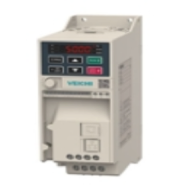
Autonomous water supply from solar panels is a real solution for thousands of Ukrainian households, farms, and summer cottages. In conditions of energy crisis, when blackouts have become commonplace, and connecting to the power grid in remote areas costs from 50 to 200 thousand hryvnias - solar pump inverters provide stable water supply without electricity at all. In this article, we will consider 5 proven schemes - from a compact summer cottage installation to an industrial system of 45 kW.
Why autonomous water supply from the sun in Ukraine
In recent years, the situation with energy supply in Ukraine has changed dramatically. Large-scale damage to energy infrastructure has led to stable electricity supply becoming a luxury, not a norm. According to various estimates, about 30% of rural areas have unreliable or limited electricity supply.
Here are typical scenarios where water supply from the sun is the best solution:
- Summer cottages and country houses - seasonal use where connecting to the grid is economically unviable
- Private houses in rural areas - permanent residence with frequent power outages
- Farms - need for stable water supply for irrigation and livestock
- Agricultural enterprises - large-scale irrigation and water supply for industrial facilities
The cost of connecting to the power grid in remote areas reaches 50,000-200,000 UAH, plus a monthly payment for electricity. A solar pumping station pays for itself in 1.5-3 years and then works for free for 20-25 years.
Scheme 1 - Domestic well for a summer cottage
The simplest and most affordable scheme for seasonal use. Ideal for a summer cottage where water is needed for household needs and irrigation.
Equipment composition:
- 2-3 solar panels of 400 W each (total 800-1200 W) - solar panels in the catalog
- Solar pump inverter Veichi SI30-SS2-R75G-R (0.75 kW)
- Submersible pump 0.75 kW
- Accumulation tank 500-1000 liters (raised 3-5 m for gravity flow)
System characteristics:
- Well depth: up to 30 m
- Performance: 2-3 m³/h
- Daily volume: 10-15 m³ per sunny day
The principle is simple: the sun shines - the pump works - the tank fills up. Water is supplied by gravity from a raised tank. The SI30 series inverter automatically tracks the maximum power point (MPPT) of the panels in the range of 150-450 V DC, starts and stops the pump according to the level of solar radiation.
Budget: ~35,000-45,000 UAH. Best suited for: summer cottage, seasonal house, garden irrigation up to 10 acres.
Scheme 2 - Private house with permanent water supply
For a family of 4-6 people living permanently. Provides full water supply for household needs, shower, washing machine, and irrigation.
Equipment composition:
- 6 solar panels of 400 W each (2400 W) - view assortment
- Solar pump inverter Veichi SI30-SS2-2R2G-R (2.2 kW)
- Submersible or well pump 2.2 kW
- Accumulation tank 2000-3000 liters + booster pump with pressure tank
System characteristics:
- Well depth: up to 80 m
- Performance: 3-5 m³/h
- Daily volume: 15-25 m³
This scheme provides stable pressure in the water supply thanks to a system with an accumulation tank and a booster pump. The deep well pump from solar panels fills a large accumulation tank, and a small booster pump (powered by battery or grid) maintains pressure in the system. The SI30-SS2-2R2G-R inverter supports single-phase 220 V input and three-phase output for the pump, which allows the use of industrial pumps.
Budget: ~65,000-85,000 UAH. Best suited for: private house, year-round living, family of 4-6 people, garden + household.
Scheme 3 - Farm with irrigation
For farmers who need stable irrigation of 1-5 hectares and water supply for livestock.
Equipment composition:
- 15-20 solar panels of 400 W each (6-8 kW)
- Solar pump inverter Veichi SI21-D5-5R5G-A (5.5 kW)
- Industrial well pump from solar panels 5.5 kW
- Large accumulation tank 5000-10,000 liters
- Drip irrigation system
System characteristics:
- Well depth: up to 120 m
- Performance: 5-10 m³/h
- Daily volume: 30-60 m³
The SI21 series inverter works with three-phase 380-460 V input and supports an MPPT range of 250-780 V DC. This allows connecting panels in long strings and reducing cable losses. The drip irrigation system ensures efficient water use - up to 90% of water goes directly to the roots of plants.
Budget: ~120,000-180,000 UAH. Best suited for: farm 1-5 ha, livestock farm, irrigation of agricultural crops.
Scheme 4 - Industrial water supply for a large agricultural enterprise
A large-scale solution for large agricultural enterprises with a need for large volumes of water.
Equipment composition:
- 40+ solar panels (16-20 kW and more)
- Solar pump inverter Veichi SI23-T3-045G-A (45 kW)
- Several industrial pumps
- Centralized water distribution system
System characteristics:
- Well depth: 150-200 m
- Performance: 20-50 m³/h
- Daily volume: 100-300 m³
The SI23 series inverter is designed for capacities from 18.5 to 110 kW and supports three-phase 380-440 V input with an MPPT range of 350-780 V. At this level, the water supply system without electricity is capable of serving a large livestock complex, tens of hectares of irrigation, and the domestic needs of personnel. A central distribution unit with shut-off valves and level sensors allows automating water supply to several facilities.
Budget: ~300,000-500,000 UAH. Best suited for: agricultural enterprises 10+ ha, livestock complexes, several buildings.
Scheme 5 - Hybrid system (sun + grid)
When the power grid is available but unreliable, a hybrid system combines the advantages of both power sources.
Operating principle:
- Solar energy - priority source (0 UAH for electricity)
- 220/380 V grid - backup source (automatic switching)
- Continuous operation regardless of weather and time of day
SI30 and SI21 series inverters support hybrid operation mode. When there is enough solar power, the system runs entirely on panels. When it's cloudy or dark, the inverter automatically switches to the grid. The transition is smooth, without water hammer or pump stoppage.
This is the most rational solution for most private houses in Ukraine: in summer, electricity costs for water supply are zero, and in winter or at night, the system runs on the grid. Read more about connecting pumps to solar panels in our article Pump from solar panels: how to connect and what you need to know.
How to calculate a solar water supply system
To correctly select equipment, you need to follow 5 steps:
Step 1. Determine daily water consumption:
- Person: 150-200 l/day
- Cow: 80 l/day
- Pig: 15 l/day
- Chicken: 0.5 l/day
- Irrigation: 5-10 l/m² per session
Step 2. Calculate the required pump performance. Daily consumption ÷ 6 hours of effective sunshine = required delivery volume (m³/h). Also consider the head: well depth + lift height + losses in the pipeline.
Step 3. Determine the required solar power. Pump power (kW) × 1.3 (30% reserve) = required solar panel power.
Step 4. Calculate the number of panels. Required power ÷ power of one panel. For example: 2.86 kW ÷ 0.4 kW = 7.15 → 8 panels.
Step 5. Select an inverter. The inverter must match the pump power and the voltage of the panel string. Check the inverter's MPPT range and ensure that the string voltage falls within the operating range.
Calculation example: Family of 4 people + garden 10 acres. Consumption: 4 × 200 = 800 l (household) + 1000 m² × 7 l = 7000 l (irrigation every other day = 3500 l/day) = 4300 l/day. Pump: 4.3 m³ ÷ 6 h ≈ 0.72 m³/h → 0.75 kW pump. Solar power: 0.75 × 1.3 = 0.975 kW → 3 panels of 400 W. Inverter: SI30-SS2-R75G-R (0.75 kW).
Installation and connection - what to consider
Proper installation is the key to the durability and efficiency of an autonomous water supply system from solar panels.
Panel orientation: for Ukraine, the optimal tilt angle is 30-35° south. This ensures maximum generation throughout the year. In summer, the angle can be reduced to 25°, in winter increased to 45° - but for a pumping system, a fixed angle of 30° is usually sufficient, as the main water consumption occurs in the summer period.
Cables:
- DC cables from panels to inverter - special solar cable 4-6 mm², UV resistant
- AC cables from inverter to pump - cross-section according to power and route length
- For route lengths over 50 m, use an increased cross-section to compensate for voltage losses
Grounding and lightning protection: mandatory for any solar system. Ground the panel frame, inverter housing, and well casing. Install surge protective devices (SPD) at the inverter input.
Accumulation tank: a raised tank provides gravity flow (1 m height ≈ 0.1 bar pressure). For full water pressure (2-3 bar), a booster pump with a pressure tank or a tank at a height of 20-30 m (water tower) is required.
Maintenance: cleaning panels from dust and dirt every 2-3 months, checking fastenings twice a year, pump overhaul annually. That's all - no consumables or fuel, unlike diesel generators.
Cost and payback of the system
Comparative table of 5 schemes:
| Scheme | Power | Budget, UAH | Payback |
| 1. Cottage | 0.75 kW | 35,000-45,000 | 1.5-2 years |
| 2. Private house | 2.2 kW | 65,000-85,000 | 2-2.5 years |
| 3. Farm | 5.5 kW | 120,000-180,000 | 2-3 years |
| 4. Industrial | 45 kW | 300,000-500,000 | 2.5-3 years |
| 5. Hybrid | any | + 5,000-10,000 | 1-1.5 years |
Operating costs in comparison:
- Solar system: 0 UAH/month
- Power grid: 500-2000 UAH/month (depending on power and tariff)
- Diesel generator: 3000-8000 UAH/month (fuel + maintenance)
Component lifespan:
- Solar panels: 20-25 years (manufacturer's warranty is usually 25 years for 80% power)
- Solar pump inverter: 10-15 years
- Submersible pump: 5-10 years (depending on water quality)
Water from solar panels is not only about savings but also about energy independence. The system operates autonomously, requires no fuel, minimal maintenance, and fully pays for itself within the first 2-3 years. To select the optimal scheme for your needs - contact our specialists or view the full catalog of solar pump inverters.