Why irrigation from solar panels is profitable
Irrigation from solar panels is a solution that is gaining popularity every year among Ukrainian farmers, gardeners, and agricultural enterprises. The reasons are quite clear: electricity is becoming more expensive, and the sun shines for free. An autonomous irrigation system from solar panels works where there is no power grid – on remote fields, garden plots, pastures, and in the mountains.
The main advantage is zero electricity costs. After initial investments, the system works for years without monthly bills. Moreover, the peak of solar generation coincides with the peak of irrigation demand: in summer, when there is most sun, plants need the most water. This is an ideal match that no other energy source provides.
Let's consider a simple payback example for a small farm of 10 ares:
- Turnkey system cost: ~40,000 UAH
- Alternative - diesel generator + pump: fuel ~8,000 UAH/season + maintenance ~3,000 UAH/year
- Payback period for the solar system: 3–4 seasons
- Panel service life: 25+ years, inverter – 10+ years
After payback, you get virtually free irrigation for decades. And for plots without grid connection, there is simply no alternative – pulling a cable to a field several kilometers away can cost more than the entire solar system.
How an autonomous solar irrigation system works
The operation scheme of an autonomous solar panel irrigation system consists of several key elements, each performing its function:
Photovoltaic panels → Solar pump inverter → Pump → Storage tank → Water distribution system (drip tape, sprinklers)
Solar panels generate direct current (DC). This current goes to a solar pump inverter – a specialized frequency converter designed specifically for working with photovoltaic panels. It converts DC into alternating current (AC) and smoothly regulates the pump's rotation frequency depending on the available solar power.
Why a solar pump inverter, and not a conventional frequency converter? The difference is fundamental:
MPPT controller (Maximum Power Point Tracking) – a built-in algorithm that constantly tracks the optimal operating point of solar panels and extracts maximum energy even with partial shading
Dry run protection – automatically stops the pump if water runs out
Soft start – smooth engine startup without inrush currents, which is critical with limited panel power
Operation at low insolation – the pump works even in cloudy weather, albeit with lower productivity
Why is a storage tank needed? This is a key element of a reliable system. The tank acts as a buffer: during the day, when the sun shines, the pump pumps water into the tank. In the evening or in cloudy weather, irrigation occurs by gravity from the tank. This ensures stable irrigation regardless of the weather. The recommended volume is a 1-2 day supply of water.
Solar panel irrigation system complete set
The selection of equipment depends on the plot area, crop type, and water intake depth. Below are three typical configurations with real prices for Veichi solar pump inverters:
| Parameter | Garden 10 ares | Farm 1 ha | Agricultural enterprise 10+ ha |
| Pump power | 0.75 kW | 2.2 kW | 7.5–15 kW |
| Number of panels (400 W) | 2–3 pcs. | 6–8 pcs. | 20–40 pcs. |
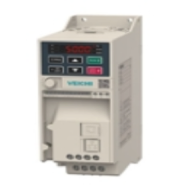
| Solar pump inverter | SI30-SS2-R75G-R | SI30-SS2-2R2G-R | SI21-D5-7R5G-A |
| Inverter price | 19,575 UAH | 20,880 UAH | from 3,700 USD |
| Inverter series | Veichi SI30 | Veichi SI30 | Veichi SI21 |
| Storage tank | 500–1000 L | 2000–5000 L | 10,000+ L or pond |
| Irrigation system | Drip tape | Drip + sprinklers | Central irrigation |
| Estimated "turnkey" cost | 35,000 – 45,000 UAH | 65,000 – 85,000 UAH | 150,000 – 250,000 UAH |
The SI30 series is ideal for small and medium-sized farms: single-phase 220V power from panels, built-in MPPT, compact housing. For powerful industrial systems, the SI21 series with a three-phase 380V output and an MPPT range of 250–780V is used.
Drip irrigation from solar panels – step-by-step instructions
Drip irrigation from solar panels is the most efficient way to use limited solar energy, as it consumes 40–60% less water compared to sprinkling. Here is a step-by-step guide with calculations:
Step 1. Water demand calculation
The average need for vegetable crops is 30–50 m³ per hectare per day at peak season. For a garden of 10 ares (0.1 ha), this is 3–5 m³ (3000–5000 liters) per day. The exact figure depends on the crop: tomatoes need more, greens – less.
Step 2. Pump selection
Key parameters: productivity (m³/h) and head (meters). For a garden of 10 ares with a well 10 m deep and a need for 5 m³/day, a 0.75 kW pump with a productivity of 2–3 m³/h is sufficient – it will pump the daily supply in 2–3 hours of operation.
Step 3. Solar array calculation
Formula: panel power = pump power × 1.3 (reserve for losses and imperfect insolation). For a 0.75 kW pump, you need: 0.75 × 1.3 = ~1 kW of panels. This is 2–3 panels of 400 W each.
Step 4. Solar pump inverter selection
The inverter is selected based on the pump motor power. For 0.75 kW – Veichi SI30-SS2-R75G-R (19,575 UAH). For 2.2 kW – Veichi SI30-SS2-2R2G-R (20,880 UAH). Important: the inverter's input voltage must match the panel configuration (series connection to increase voltage).
Step 5. Storage tank installation
The tank is placed on an elevation (2–3 meters) to create pressure by gravity. For drip irrigation, a pressure of 0.5–1.5 bar is sufficient, which is provided by raising the tank by 5–15 meters. The minimum volume is the daily water supply.
Step 6. Drip system connection
From the tank, water flows by gravity into the main pipe, from which drip tapes branch out along the beds. Drip emitters with a flow rate of 1–2 L/h ensure uniform wetting of the root zone. It is recommended to install a fine filter between the tank and the tapes.
Example calculation for a 10-are garden with tomatoes:
- Need: 4000 L/day (40 L/m² × 0.1 ha)
- Pump: submersible 0.75 kW, 3 m³/h, head 20 m
- Panels: 3 × 400 W = 1.2 kW
- Inverter: SI30-SS2-R75G-R
- Tank: 1000 L at a height of 3 m
- Pump operation time: ~1.5 hours per day
- Drip tape: 500 m (row spacing 30 cm)
Garden irrigation from solar panels – budget option
Not everyone needs a system worth hundreds of thousands of hryvnias. For a city dacha, a household plot, or a greenhouse, there is a budget solution that costs up to 40,000 UAH and is completely autonomous.
Minimum complete set for a solar garden irrigation system:
- 2 solar panels of 400 W each – ~8,000–10,000 UAH
- Solar pump inverter Veichi SI30-SS2-R75G-R – 19,575 UAH
- Submersible pump 0.75 kW – 3,000–5,000 UAH
- Tank 500 L – 2,000–3,000 UAH
- Drip tape + fittings – 1,500–2,500 UAH
- Cable, fasteners, installation – 2,000–3,000 UAH
- Total: 36,000 – 43,000 UAH
This system is suitable for:
- A garden at a dacha without grid connection
- A household plot with a well or borewell
- A greenhouse with drip irrigation
- A small garden with berry bushes and fruit trees
The SI30 series inverter supports operation from 2 panels and automatically adjusts the pump speed depending on the intensity of the sun. Even on a cloudy day, it will extract enough energy to slowly fill the tank.
Irrigation of large areas: industrial solar irrigation
For agricultural enterprises with areas of 10 hectares or more, completely different capacities are needed. Here, pumps from 7.5 to 200 kW, arrays of dozens of solar panels, and industrial inverters from the Veichi SI23 series with power from 37 to 200 kW are used.
When to use the SI23 series:
- Central irrigation systems with powerful centrifugal pumps
- Pivot irrigators for fields from 50 ha
- Water supply systems for livestock complexes
- Pumping water from rivers and canals into the irrigation network
The SI23 series has a three-phase 380V output, a power range from 37 to 200 kW, and prices from 32,277 UAH (37 kW) to 135,720 UAH (200 kW). The built-in MPPT controller works with panel arrays up to 850V DC.
Economics of industrial solar irrigation:
For a 50 ha field with a 37 kW pump, electricity costs from the grid would be ~120,000 UAH/season (at a tariff of 3.5 UAH/kWh and 6 hours of operation per day for 150 days). A solar system with 100 panels and an SI23 inverter costs ~500,000 UAH and pays for itself in 4–5 seasons. After that – pure profit.
Seasonality and operational features in Ukraine
Ukraine is located in a zone with sufficient solar insolation for the effective operation of solar panel irrigation systems. The average annual insolation is 1100–1500 kWh/m² depending on the region (more in the south, less in the north).
Spring (March–May)
Soil moisture is still high after winter, so irrigation needs are minimal. The duration of daylight hours increases, but the intensity is still low. This is the time to start and test the system after winter downtime. Sufficient for watering seedlings and early crops.
Summer (June–August)
The peak irrigation demand ideally coincides with the peak of solar generation. In June–July, the duration of daylight hours reaches 16 hours, and insolation intensity is maximal. The system operates at full capacity for 10–12 hours a day. This is the most productive period.
Autumn (September–November)
Irrigation needs decrease, but for late crops (cabbage, beets, carrots), irrigation is still necessary. Solar generation decreases but remains sufficient for moderate irrigation. In October, the system is gradually taken out of operation.
Winter (December–February)
The system is not operating. Recommended: drain water from the pump and pipes (freeze protection), cover panels or store them (optional), check fasteners and connections, prepare filters for the next season.
Regional features: in the south of Ukraine (Kherson, Mykolaiv, Odesa regions), the solar irrigation system works 20–30% more efficiently than in the north (Chernihiv, Volyn). But even in the northern regions, there is enough power for gardens and small farms.
Comparison with alternatives
To finally decide on the choice, let's compare the solar irrigation system with the main alternatives over a 5-year period for a 1 ha plot:
| Criterion | Solar system | Generator + diesel pump | Grid connection | Manual irrigation |
| Initial costs | 70,000 UAH | 25,000 UAH | 80,000–200,000 UAH (depending on distance) | 5,000 UAH (hoses, barrels) |
| Annual costs | 0 UAH | 25,000–35,000 UAH (fuel + maintenance) | 15,000–20,000 UAH (electricity) | 0 UAH (but labor costs) |
| Costs over 5 years | 70,000 UAH | 150,000–200,000 UAH | 155,000–300,000 UAH | 5,000 UAH + ~500 hours of labor |
| Autonomy | Complete | Fuel needed | Grid dependence | Person needed |
| Noise | Silent | 70–90 dB | Silent | Silent |
| Maintenance | Minimal | Regular (oil, filters) | Minimal | Not needed |
| Environmental friendliness | 100% clean energy | CO₂ emissions, noise | Depends on source | Environmentally friendly |
| Irrigation uniformity | Automatic, stable | Automatic | Automatic | Uneven |
As can be seen from the table, the solar irrigation system has the lowest total cost of ownership over 5 years among automated solutions. The only alternative that is cheaper at the start is manual irrigation, but it requires hundreds of hours of physical labor each season and does not provide uniform irrigation.
For those who already have a pump from solar panels and want to expand the system to full automatic irrigation, the transition is minimal: just add a storage tank and a drip system.
Choose equipment from our catalog of solar pump inverters and get a free consultation on selecting a complete set for your plot. SI30 series for gardens and farms and SI23 series for industrial irrigation – always in stock with warranty and technical support.