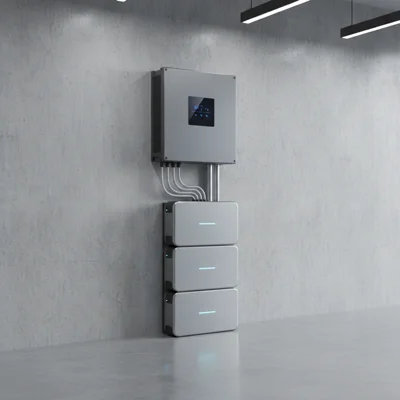
Hybrid inverter for business — why and when it works
For a business, a blackout is not just an inconvenience — it is direct losses. A store without power does not sell. A restaurant without refrigeration loses products. An auto shop without electricity stands idle. A hybrid inverter solves this: it keeps critical equipment running during outages and simultaneously reduces your electricity bill through solar generation.
Payback for business is typically faster than for homes — 2-4 years instead of 5-7. The reason is simple: businesses consume more electricity during the day (when the sun is working), and downtime losses far exceed the system cost.
Business types where a hybrid pays off fastest
Retail (shops, gas stations)
- Typical consumption: 5-15 kW
- Critical equipment: POS systems, security, refrigerators, lighting
- Losses from 1 hour downtime: $50-250 (lost sales + spoiled goods)
- Recommended system: 10 kW inverter + 20 kWh battery
Restaurants and cafes
- Typical consumption: 10-25 kW (kitchen is the main consumer)
- Critical: cold rooms, exhaust, lighting, POS
- Downtime losses: $120-500/hour
- System: 15-20 kW inverter + 30 kWh, three-phase
Auto shops and car washes
- Typical consumption: 15-30 kW
- Critical: compressor, lighting, high-pressure pump
- System: 20-30 kW three-phase + 30-50 kWh
Small manufacturing
- Typical consumption: 20-100 kW
- Critical: CNC machines (stoppage = scrap), refrigeration, servers
- System: 30-50 kW or a cluster of parallel inverters
Offices and coworking spaces
- Typical consumption: 5-15 kW
- System: 5-10 kW + 10-15 kWh
ROI calculation for business
Payback depends on three factors: how much you pay for electricity, how much you lose during blackouts, and how much sun your region gets.
| Parameter | Retail store | Restaurant | Manufacturing |
|---|---|---|---|
| Average consumption | 8 kW | 15 kW | 30 kW |
| Monthly electricity bill | $200 | $450 | $1125 |
| System cost | $5000-7000 | $10000-15000 | $20000-35000 |
| Monthly solar savings | $75-100 | $150-225 | $375-625 |
| Monthly blackout losses | $250+ | $500+ | $1250+ |
| Payback | 2-3 years | 2-3 years | 2-4 years |
Note: payback is calculated from both electricity savings and avoided downtime losses. With blackouts 2-3 times a week, the system may pay for itself even faster.
Single-phase or three-phase for business
Almost always three-phase. Businesses drawing over 10 kW have three-phase connections. For large sites, multiple inverters in parallel work well. Details in the three-phase hybrid inverter article.
Commercial inverter models
Deye SUN-12K-SG04LP3-EU (12 kW)
Entry level for small business. Two MPPTs, 48V battery, Wi-Fi. Series review in the Deye article.
Deye SUN-20K-SG01HP3-EU (20 kW)
Mid-range. Three MPPTs, high-voltage battery, parallel up to 10 units.
Deye SUN-30K-SG01HP3-EU (30 kW)
For manufacturing and large sites. Up to 45 kW PV input, parallel up to 300 kW.
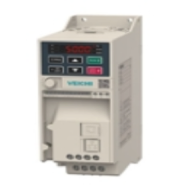
VEICHI SI-30K-T (30 kW)
Industrial grade. PV voltage range up to 800V.
Solar panels for business
Commercial properties usually have large roofs — that is an advantage. A 20 kW system needs 30-40 panels at 550-600 W, covering 60-80 m² of roof. Panels work during the day when consumption peaks. Even without a battery (solar + grid only), a business saves 30-50% on electricity.
Pitfalls for business installations
- Permits — systems over 30 kW need a project and utility approval
- Insurance — some insurers require notification about solar installation
- Leased premises — landlord consent is needed. Plan for what happens at lease end
- Tax implications — a solar system may affect depreciation and income tax
- Shading — commercial roofs often have HVAC units, antennas, and adjacent buildings creating shade. Conduct a shading analysis before installation
Case study: grocery store in Vinnytsia
Store 200 m², 3 refrigerated display cases, 2 POS terminals. Average consumption 8 kW, peak 12 kW. Blackouts 3-4 times per week.
Installed: Deye SUN-12K-SG04LP3-EU + 20 kWh LiFePO4 + 12 panels. Total cost ~$8500.
- Electricity bill dropped from $300 to $138/month (-54%)
- Zero downtime from blackouts — everything runs on battery + solar
- Spoiled products due to outages: zero (previously $75-125/month losses)
- Projected payback: 18-22 months
Frequently Asked Questions
Can I install a hybrid inverter in a leased space?
Yes, but you need written landlord consent. Dismantling at lease end costs $500-1000. The inverter and batteries are portable; roof-mounted panels are not.
What is the payback for a small business?
Typically 2-4 years with consumption from 8 kW and regular blackouts. Without blackouts (savings only) — 4-6 years.
Do I need a license for a business solar system?
For systems up to 30 kW — no. For larger ones — a project and utility approval. For a feed-in tariff on a legal entity — a separate documentation package regardless of size.
Can I scale the system later?
Yes. You can add panels, batteries, or a second inverter in parallel. Choose an inverter that supports parallel connection.
Hybrid or generator — which is better for business?
A generator is cheaper upfront ($1000-3000 for 10-20 kVA) but needs fuel, maintenance, and manual startup. A hybrid is pricier but automatic, silent, and reduces your electricity bill. With regular blackouts (2+ times per week), a hybrid is more cost-effective within 2-3 years.
Getting started
First step: calculate your consumption from bills over the last 6 months. Then browse our hybrid inverter catalog or contact us for a free calculation with a specific configuration for your site.