Bifacial panels — what they are and who needs them
Bifacial solar panels generate electricity from both sides: the front captures direct sunlight, while the rear picks up light reflected off the surface below. The extra generation from the back adds 5-25% depending on surface type and mounting height.
In practice, a 500 W bifacial panel can output 525-625 W in real conditions over white gravel or concrete. On dark soil the effect is minimal (3-5%). Bifacial is a tool that works with the right setup, not a magic upgrade.
How bifacial technology works
Standard panels have an opaque backsheet. Bifacial panels replace it with transparent glass or film. The cells are the same (PERC, TOPCon, or HJT) but now capture photons from both sides.
- Glass-glass — most durable. Both sides are tempered glass. 30-year warranty, better moisture and impact resistance. Heavier by 2-4 kg.
- Glass-foil — lighter, cheaper, less durable. 25-year warranty.
Bifaciality factor
| Technology | Bifaciality | Extra generation (good albedo) |
|---|---|---|
| PERC bifacial | 65-75% | 5-15% |
| TOPCon bifacial | 80-85% | 8-20% |
| HJT bifacial | 90-95% | 10-25% |
When bifacial delivers real value
- Ground mount on light surface — gravel, white sand, concrete. Albedo 0.4-0.7, extra 10-25%.
- Flat roof with white coating — TPO membrane or high-albedo paint. Extra 8-15%.
- Facade mounts and canopies — reflection from walls and ground.
- Snow cover in winter — snow albedo 0.8-0.9. Bifacial can recover 30-40% of winter losses through reflection.
Where bifacial does NOT work
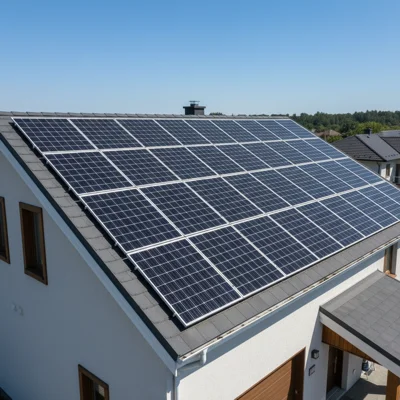
- Flush mount on a dark roof — rear gets almost no light (+1-3%)
- Shaded rear side — wall or neighbouring row too close
- Dark ground — topsoil, dark asphalt, lawn (albedo 0.1-0.2)
Mounting: height matters
| Height above surface | Extra generation (white surface) |
|---|---|
| 0-20 cm (flush) | 2-5% |
| 30-50 cm | 5-12% |
| 80-120 cm | 10-18% |
| 150-200 cm (canopy) | 15-25% |
Cost and payback
Bifacial panels cost 5-15% more than standard. Glass-glass is 8-15% more, glass-foil 5-10%.
On a white surface at 50+ cm height, the premium pays back in 1-2 years through extra generation. On a dark flush-mounted roof — probably never.
Our advice: ground mount or flat roof with light coating — bifacial is worth the premium. Standard pitched roof — put the cost difference toward an extra standard panel instead.
Frequently Asked Questions
How much extra energy does bifacial generate?
3% to 25%. On white gravel at 1 m height — 15-25%. On a dark roof flush-mounted — 3-5%.
Do I need a special inverter for bifacial?
No. Bifacial panels connect like standard panels. Just check that the inverter max input current accommodates the potentially higher output.
Are bifacial panels heavier?
Glass-glass is 2-4 kg heavier (28-32 kg vs 25-28 kg for a 500 W panel). Glass-foil is nearly the same weight as standard.
Is bifacial worth it on a pitched roof?
Usually no. The gain of 3-5% rarely justifies the premium on a pitched roof.
Which technology is best for bifacial?
HJT has the highest bifaciality (90-95%). TOPCon is a good balance (80-85%). PERC is the budget option (65-75%).
Summary
Bifacial panels excel on ground mounts and flat roofs with light surfaces. On standard pitched roofs, benefits are minimal. Browse our solar panel catalog or compare models: 500 W, 600 W. Selection guide here.