Veichi CH310E Frequency Inverters for Elevators
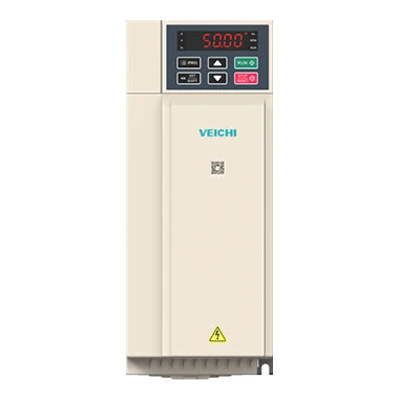
The elevator drive decides how a person feels inside the car. Too sharp a start is unsettling, a long crawl to the floor is annoying, and rollback at take-off is simply unacceptable. The Veichi CH310E series is a family of frequency inverters designed specifically for elevators — passenger and freight, in new buildings and in the modernization of older shafts.
What CH310E delivers
The drive works through the entire car travel profile — acceleration, cruising speed, floor-approach braking and precise stopping — so the passenger never feels the transitions between phases. Four independent S-curves and the ASR PI speed regulator handle this. At take-off the anti-rollback function keeps the car from drifting back under its load even without a weighing sensor, which matters most for gearless PMSM drives.
One drive for any elevator
CH310E works with both geared asynchronous motors (IM) and gearless synchronous motors (PMSM). A single series therefore covers both installing a new elevator and replacing an obsolete control station in an existing shaft. Power ratings run from 4 to 37 kW on a 3×380–480 V supply.
Safety built into the hardware
A braking module is built into every model — no separate unit to buy. The drive detects phase loss in under 200 ms, manages the mechanical brake and locks out start after a fault until the cause is cleared. On power loss it switches to evacuation mode from a 220 V UPS: the drive picks the lighter load side itself and brings the car to the nearest floor.
How to choose a model
The guide is simple — the elevator traction motor power and the drive output current (from 10 A on the smallest model to 75 A on the 37 kW unit). Low-rise and light passenger elevators are usually covered by the 4–7.5 kW range, multi-floor passenger and freight elevators by 11–22 kW, and heavy freight and high-rise applications by 30–37 kW. See the full range in the frequency inverter catalogue, the base platform in the Veichi AC310 series, and other brand solutions on the Veichi page.