Why Variable Frequency Drive Motor Control Matters
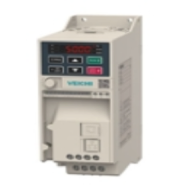
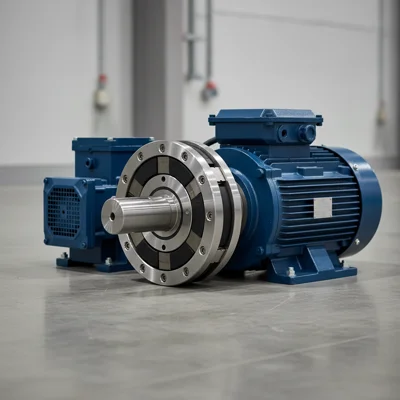
Variable frequency drive (VFD) motor control is a method of regulating the rotational speed of AC induction or synchronous motors by varying the frequency and amplitude of the supply voltage. It is implemented using frequency converters (VFDs), which convert the industrial 50 Hz mains supply into a variable frequency from 0 to 400 Hz and beyond. This enables smooth acceleration and deceleration, speed maintenance regardless of load, and significant reductions in electrical energy consumption.
According to the International Energy Agency (IEA), electric motors consume over 45% of all electricity generated worldwide. Implementing VFD control on even 10% of the existing motor fleet would yield savings equivalent to the output of several power plants. This is precisely why VFDs have become the standard in modern industry, utilities, and construction.
How VFDs Work: Core Principles
A variable frequency drive consists of three key sections: a rectifier (converts AC to DC), a DC bus (smooths ripple), and an inverter (generates output voltage at the required frequency and amplitude). Modern VFDs employ IGBT transistors and pulse-width modulation (PWM) algorithms, delivering:
- precise speed control with accuracy up to 0.01% (closed-loop vector control);
- soft starting without inrush current spikes (1-1.5 times rated current instead of 6-8 times);
- automatic maintenance of process parameters (pressure, temperature, flow rate);
- motor protection against overload, phase loss, and overheating;
- energy regeneration during braking (in models with active front-end).
For applications requiring only soft starting without continuous speed control, soft starters are used. They limit inrush current during startup, but the motor runs at fixed speed once fully accelerated.
8 Industries Where VFD Motor Control Is Applied
1. Pumping Systems and Water Supply
Pumps are the most common application for VFDs. In water supply, sewage, and irrigation systems, the frequency converter controls pump output to maintain a set pressure or fluid level. This eliminates throttle valve control, which wastes up to 40% of energy. For detailed VFD pump configuration, see our guide on Setting up frequency converters with pressure sensors.
Key benefits for pump applications:
- 30-60% energy savings compared to throttle valve control;
- stable pressure throughout the water supply network;
- water hammer protection through smooth starts and stops;
- extended service life of valves and piping;
- automatic pump rotation in cascade configurations.
2. HVAC and Ventilation Systems
Ventilation systems rarely operate at 100% capacity — average load is typically 60-75% of rated output. According to the affinity laws (fan laws), reducing fan speed by 20% decreases energy consumption by 50%. This makes HVAC one of the most profitable sectors for VFD implementation. Learn more in our article on Frequency converters for energy-efficient ventilation.
VFD benefits in HVAC:
- automatic airflow adjustment based on CO₂, humidity, and temperature sensor readings;
- reduced noise levels at lower speeds;
- decreased stress on ductwork;
- 30-50% annual energy savings;
- integration with building management systems (BMS).
3. Compressor Systems
Compressors consume up to 30% of total electrical energy at industrial facilities. Traditional load/unload control is inefficient: during idle operation, the compressor still uses 25-30% of rated power. VFD control enables precise pressure maintenance, eliminating waste. For a practical example, see our article on Compressor modernization: VFD setup for compressor operation.
- 20-40% energy savings;
- reduced peak load on the electrical grid;
- stable pressure without fluctuations;
- extended compressor group service life;
- reduced air heating at partial loads.
4. Conveyor and Material Handling Systems
On production lines, in logistics centres, and in mining, conveyors require variable speeds depending on loading. VFDs provide soft belt starts (without jerking or slipping), precise material feed speed control, and synchronisation of multiple conveyors into a unified line. This is especially critical for packaging lines and sorting facilities.
5. Elevators and Crane Equipment
Modern elevators and overhead cranes use VFDs for smooth acceleration, precise positioning, and comfortable deceleration. Without frequency control, elevators move in jerks, which is unacceptable for passenger transport and hazardous for cargo operations. Regenerative braking returns up to 30% of energy back to the grid.
6. Metalworking and Machine Tools
Milling, turning, and grinding machines require spindle speed changes depending on workpiece material, tool diameter, and cutting mode. VFDs replace complex mechanical gearboxes, simplifying machine design and improving machining precision. For woodworking machines, frequency control is a mandatory safety requirement.
7. Food and Pharmaceutical Manufacturing
Mixers, dosing systems, homogenisers, and centrifuges all require precise speed control. In food production, VFDs ensure uniform ingredient mixing, accurate liquid and powder dosing, and controlled filling operations. Hygiene requirements mandate the use of motors with IP55 or higher ingress protection ratings.
8. Agriculture and Irrigation
Drip irrigation automation, livestock facility ventilation, and grain dryer control are all effectively managed with VFDs. In seasonal operations where load varies from 20 to 100%, energy savings can reach 50%. VFDs are also used to run three-phase motors from single-phase supplies — read more in our article on Connecting a three-phase motor to a 380V supply.
Energy Savings Comparison Table by Industry
| Industry / Equipment | Energy Savings | Payback Period | Additional Benefits |
|---|---|---|---|
| Water Supply Pumps | 30–60% | 6–18 months | Stable pressure, water hammer protection |
| HVAC and Ventilation | 30–50% | 8–14 months | Noise reduction, automatic climate control |
| Compressors | 20–40% | 12–24 months | Stable pressure, extended equipment life |
| Conveyors | 15–30% | 12–20 months | Soft start, line synchronisation |
| Elevators and Cranes | 20–35% | 18–36 months | Energy regeneration, comfort, safety |
| Machine Tools | 10–25% | 12–24 months | Machining precision, simplified design |
| Food Processing | 15–35% | 10–18 months | Precise dosing, process uniformity |
| Agriculture | 25–50% | 8–16 months | Automation, single-phase operation |
How to Choose the Right VFD for Your Application
VFD selection depends on load type, motor power, operating conditions, and the required level of automation. Key criteria:
- Load type: variable torque (fans, pumps — quadratic torque curve) or constant torque (conveyors, cranes). Standard duty VFDs suffice for fans and pumps; heavy-duty rated VFDs are needed for cranes.
- Power rating: must match or exceed the motor's rated power. Our frequency converter catalogue features models from 0.2 to 630 kW.
- Supply voltage: single-phase 220V or three-phase 380V. Single-phase VFDs are popular in residential and small business applications.
- Ingress protection: IP20 for panel mounting, IP55/IP65 for dusty or wet environments.
- Communication interfaces: Modbus RTU/TCP, Profibus, Profinet, CANopen — for SCADA and PLC integration.
Find answers to common questions about selection and setup in our article Top questions about VFDs and soft starters.
VFD vs Soft Starter: When to Choose Which
A common question: is a VFD always necessary, or will a soft starter suffice? Here are the key differences:
| Parameter | Variable Frequency Drive (VFD) | Soft Starter |
|---|---|---|
| Speed control | Yes, continuously 0-100% | No, start and stop only |
| Energy savings | 20-60% (continuous) | During start-up only |
| Inrush current reduction | Down to 1-1.5 In | Down to 2-4 In |
| Cost (for 15 kW) | From 15,000 UAH | From 6,000 UAH |
| Typical application | Pumps, HVAC, conveyors | Pumps, compressors with infrequent starts |
If your equipment consistently operates under variable load, choose a VFD. If the motor always runs at full power and you only need soft starting, a soft starter is the more cost-effective solution.
Conclusion
Variable frequency drive motor control is a proven technology that pays for itself within 6-24 months and delivers 20-60% energy savings depending on the industry. The greatest impact is achieved with pumps, fans, and compressors, where load varies throughout the day or season. Beyond energy savings, VFDs extend the service life of motors and mechanical components, reduce noise, and improve the quality of industrial processes.