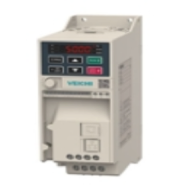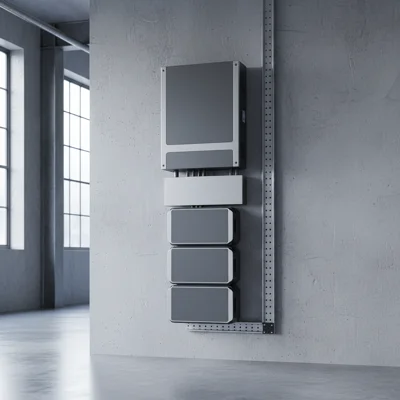
How a hybrid inverter works and why you need one
A hybrid inverter is a device that converts DC power from solar panels and batteries into 220V AC for your home. Its main advantage is that it works with three sources simultaneously: the grid, solar panels, and a battery. When the grid is available, it charges batteries and powers your home. Power goes out? It switches to battery in 10-20 milliseconds (you will not even notice). Sun is shining? It uses solar energy first and stores the surplus.
Put simply, it is a smart mediator between all electricity sources in your home. It decides where to draw power from and where to send it. You do not need to switch anything manually — everything is automatic.
What is inside a hybrid inverter
Inside a housing roughly the size of a microwave, several blocks are assembled, each responsible for its own task.
- MPPT controller — tracks the maximum power point of solar panels. If a cloud covers part of the panels, it adapts and extracts the maximum from what is available
- Inverter bridge — converts direct current (DC) into alternating current (AC). This is what makes 220V from what panels and batteries provide
- Charger — manages battery charging. Controls current, voltage, temperature. Protects the battery from overcharging
- Automatic transfer switch (ATS) — switches between grid and off-grid mode. Those same 10-20 ms during which you will not have time to blink
- Control board — the brain of the device. Collects data from all sensors, makes decisions, enables monitoring via Wi-Fi or a mobile app
For comparison, a regular grid-tied inverter only has an MPPT and inverter bridge. No battery, no off-grid capability. And an off-grid inverter only works from batteries, without grid synchronization. A hybrid combines both approaches.
Three operating modes of a hybrid inverter
The hybrid switches between modes automatically — you do not need to configure anything manually (though you can). Here is what a typical day looks like.
Mode 1: Grid + solar (daytime)
In the morning, the sun rises, panels start generating. The inverter first directs this energy to power the house. If panels produce more than the house consumes, the surplus goes to charging the battery. Battery full? Then the surplus is either fed back to the grid (if allowed) or curtailed.
In this mode, your electricity bill is minimal — you are essentially living off solar power.
Mode 2: Off-grid (blackout)
The grid goes down. ATS triggers in 10-20 ms. The inverter switches to battery and continues powering the load. A 5 kW inverter will keep your fridge, lights, boiler, and even air conditioning running — as long as you do not turn everything on at once. Solar continues charging the battery, so autonomy can last a very long time.
Mode 3: Battery priority (nighttime)
At night there is no sun. The inverter runs on grid power but can use the battery to cover peak loads. Some models allow programming: for example, charge the battery on a night tariff (when electricity is cheaper) and use stored energy during the day. This makes sense with a dual-zone meter.
How much power does a house need
A typical house of 100-150 m² consumes 3-7 kW simultaneously. But that is the peak — average consumption is usually 1.5-2.5 kW. Here is a rough guide:
| House type | Peak consumption | Recommended inverter | Minimum batteries |
|---|---|---|---|
| Apartment / small cottage | 2-3 kW | 3 kW | 5 kWh |
| House 80-120 m² | 3-5 kW | 5 kW | 10 kWh |
| House 150-200 m² | 5-8 kW | 8 kW | 15 kWh |
| Large house / small business | 8-12 kW | 10-12 kW | 20+ kWh |
Important: inverter power rating is not the same as battery capacity. A 10 kW inverter can output 10 kW, but if the battery is small it will drain it in an hour. So you need to match both power and capacity. There is a separate LiFePO4 battery guide for choosing the right battery.
How a hybrid differs from a UPS and a generator
We hear this question constantly, so here is the straight answer: a hybrid inverter is not a UPS and not a generator replacement. While all three provide backup power, they work differently.
- UPS — holds the load for 15-30 minutes, designed for a computer or boiler. Does not work with solar, does not scale
- Generator — delivers high current but needs fuel, makes noise, requires maintenance. Not automatic (unless it is an inverter generator with ATS)
- Hybrid inverter — runs on solar + battery + grid. Silent, automatic, scales by adding panels and batteries. Downside — higher upfront investment
If blackouts are rare for you (once a month), a generator is cheaper. If outages are regular (several times a week or daily), a hybrid system pays for itself faster. For example, a system with a Deye 5 kW + 10 kWh LiFePO4 + 4 panels at 500 W will fully power a house up to 120 m².
What you need for installation
A minimum system looks like this:
- Hybrid inverter (from 5 kW for a house)
- LiFePO4 batteries (from 5 kWh, better 10+)
- Solar panels (4-8 panels at 500-600 W each)
- Panel mounting (roof or ground)
- Cables, breakers, surge protection
- Installation by a certified electrician (mandatory!)
More details on connection in the article how to connect a hybrid inverter to solar panels. And a full cost breakdown is in the piece about autonomous home power supply.
Frequently Asked Questions
Does a hybrid inverter work without a battery?
Yes, most models work without a battery — like a regular grid-tied inverter. But then when the grid goes down, power goes down too. The battery is needed specifically for off-grid mode.
How long does a hybrid inverter last?
Manufacturers claim 10-15 years. In practice it depends on conditions: temperature, dust, load. Warranty is usually 5 years. Deye and VEICHI offer 5 years standard from the date of purchase.
Can I install a hybrid inverter myself?
Technically yes, if you have electrical experience. But we recommend a certified electrician. First, it is safer. Second, some manufacturers void the warranty for self-installation.
Is a hybrid inverter noisy?
Minimally — 30-45 dB (quiet conversation level). Fans kick in at loads above 50%. At night with low consumption the inverter is nearly silent. Install it in a utility room or garage.
Do I need a feed-in tariff for a hybrid inverter?
No. A feed-in tariff is about selling surplus to the grid. A hybrid inverter works without it — it simply stores surplus in the battery instead of selling. If you want to sell, you need registration, a meter, and a contract with your utility company.
Summary
A hybrid inverter is the brain of a home energy system. It works with the grid, solar, and battery simultaneously, switches automatically, and lets you scale the system over time. For a typical house, start with a 5 kW model and a 10 kWh battery. That is enough for basic autonomy during daily blackouts. Then add panels and batteries as needed.