Hybrid inverter installation — step-by-step guide
You can install a hybrid inverter in one day if everything is prepared in advance. A typical installation takes 4-8 hours depending on the number of roof panels and how neatly the house is wired. We will cover what to prepare before the installer arrives, what materials to buy, and where you should absolutely not cut corners.
Right away: we recommend hiring a certified electrician. Not because it is rocket science — but because a wiring mistake can destroy the inverter in a second, and that is $700-1500. Plus some manufacturers (Deye, VEICHI) void the warranty without professional installation.
What you need before installation
Preparation is 50% of success. If the installer arrives and the wall is not ready or cables are not run — they come back the next day, and you pay double.
Preparation checklist
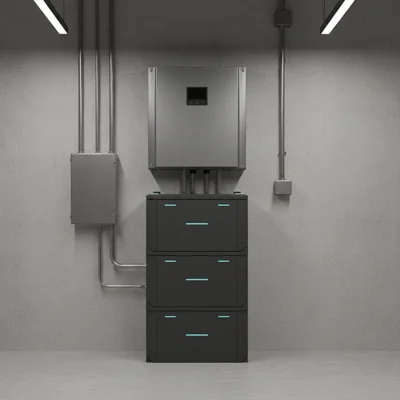
- Choose a location for the inverter — a wall in a utility room, garage, or covered terrace. Not in direct sunlight. Not in a damp basement. Minimum 50 cm from ceiling, 30 cm clearance on sides
- Prepare the wall — a 5 kW inverter weighs 20-30 kg. The wall must be brick, concrete, or solid block. Drywall will not hold without backing
- Run cable routes — from roof (panels) to inverter, from inverter to distribution board. Conduit or cable tray
- Install a dedicated breaker — at the panel board for the inverter. Typically 32A for 5 kW
- Grounding — a proper grounding system is mandatory
- Wi-Fi coverage — the inverter connects to Wi-Fi for monitoring. Check signal at the installation point
Hybrid inverter wiring diagram
A typical layout (simplified): solar panels → DC cables → inverter → AC cables → distribution board → loads. In parallel: battery → battery cables → inverter. Separately: grid → input breaker → inverter.
Solar panel connection
Panels are wired in series into strings. The number of panels per string depends on the inverter MPPT input voltage. For example, a Deye 5 kW accepts up to 500V per MPPT input — that is 8-10 panels at 550 W per string. Detailed connection instructions in a separate article.
- MC4 connectors — the standard for solar panels. Crimped with a dedicated tool, never twisted
- 4 or 6 mm² solar cable — UV-resistant
Battery connection
The battery connects to the inverter via power cables. Minimum 16 mm² cross-section for 48V systems.
- A fuse or breaker on the battery line is mandatory — 100-200A for 5 kW
- LiFePO4 batteries have a built-in BMS
- Polarity — check three times before connecting. Reversed polarity = instant inverter death
Grid connection
The inverter connects to the grid through a dedicated breaker. During a blackout, the inverter does NOT feed power into the grid (anti-islanding protection).
Common installation mistakes
- Thin battery cables — 6 mm² instead of 16 mm². Result: overheating, voltage drop
- Mixed-wattage panels in one string — the whole string performs at the weakest panel's level
- Inverter in direct sunlight — overheating in summer, electronics degradation
- No grounding — dangerous and voids warranty
- Long panel cables — 50+ meters of thin cable = 5-10% losses
Tools and materials
- Solar cable 4-6 mm² — panels to inverter (UV-resistant)
- Power cable 16 mm² — battery to inverter
- Power cable 6-10 mm² — inverter to distribution board
- MC4 connectors + crimping tool
- Circuit breakers — DC for panels, AC for grid, DC for battery
- Conduit or cable tray
- Grounding wire 10 mm²
- Panel mounting hardware
Approximate materials cost: $150-400.
Installation cost
| System type | Inverter + battery install | Panel mounting | Total |
|---|---|---|---|
| 5 kW, 4-6 panels | $200-300 | $200-350 | $400-650 |
| 10 kW, 8-12 panels | $300-400 | $400-600 | $700-1000 |
| 20 kW, 20+ panels | $400-600 | $800-1200 | $1200-1800 |
Full system cost in the article autonomous home power supply cost.
Commissioning and first startup
- Polarity check — multimeter on all connections
- Panel voltage check — verify expected value
- Battery type setting — LiFePO4, AGM, GEL
- Charging parameters — cutoff voltage, max current, depth of discharge
- Operating mode — solar priority, battery priority, grid charge time
- Wi-Fi connection — register in monitoring app (SolarMan for Deye)
- Blackout test — switch off the input breaker and verify the inverter switches to battery
Do not skip the blackout test! We have seen perfectly installed systems where the ATS did not trigger due to wrong settings.
Post-installation maintenance
- Check terminal tightness once a year (vibration loosens them)
- Clean ventilation openings from dust
- Check battery health through the app (SOH)
- Wash solar panels with water (no pressure washer!)
- Update inverter firmware if available
Frequently Asked Questions
How long does hybrid system installation take?
4 to 8 hours for a typical home system (inverter + 6-8 panels + battery). Large commercial systems take 1-3 days.
Do I need a project plan for installation?
For a home system up to 30 kW, no formal project is required. But for a feed-in tariff you need documentation for the utility. Commercial sites require a formal project.
Can I install the inverter outdoors?
Depends on the protection rating. Most hybrids are IP65 — dust and water jet protected. But avoid direct rain and frost. Install under a canopy.
What happens if I connect the battery wrong?
Reversed polarity instantly destroys the inverter. This is not covered by warranty.
Can I add panels or batteries later?
Yes. Panels go on a free MPPT input or in parallel with existing ones. Batteries connect in parallel (same type and capacity).
Summary
Installing a hybrid inverter is not rocket science, but it is not a place for improvisation either. Prepare the location, buy the right cables, hire a certified electrician — and you will have a working system in one day. If you are still choosing equipment, browse our hybrid inverter catalog or read the home inverter selection guide.