Danfoss VLT 2800 Fault Codes — Reference Guide
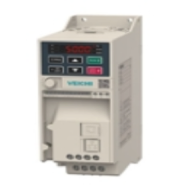
The Danfoss VLT 2800 is a series of variable frequency drives ranging from 0.37 to 45 kW, manufactured from the late 1990s. Officially discontinued, but thousands of these drives are still running in factories, pump stations, and HVAC systems across Eastern Europe and beyond. The challenge: the documentation is old, authorized service partners are rare, and searching alarm codes online often returns incomplete or incorrect information.
This article is a practical alarm code reference for the VLT 2800. It covers the complete list of alarms AL 1–AL 38 with root cause explanations and specific diagnostic steps. If your drive is showing a fault and you are not sure where to begin — this guide has you covered.
One important note upfront: the VLT 2800 is 20-25-year-old equipment. Some faults, especially AL 7 and AL 8, may not have an external cause at all — they can result from aging electrolytic capacitors in the DC bus. Keep this in mind when diagnosing.
Complete VLT 2800 Alarm Code Table
All documented alarm codes for the VLT 2800 series are listed below. The "Trip Lock" column means the drive is hard-locked and requires a full power cycle after clearing the fault — a standard Reset command will not work.
| Code | Name | Trip Lock | Cause |
|---|---|---|---|
| AL 1 | 10V supply low | No | Internal +10V reference supply is below threshold. Check load on terminal 50. |
| AL 2 | Live zero error | No | Analog input signal (0-20 mA or 4-20 mA) is absent or below minimum. Broken cable or failed sensor. |
| AL 4 | Mains phase loss | No | One supply phase is missing. Check L1/L2/L3 connections and input fuses. |
| AL 7 | DC overvoltage | No | DC bus voltage exceeded the trip threshold. Causes: supply overvoltage, braking too fast, missing or faulty brake resistor, or — in older drives — dried-out DC bus capacitors. |
| AL 8 | DC undervoltage | No | DC bus voltage dropped below threshold. Mains voltage sag, oxidized contacts on input choke, or degraded DC bus capacitors. |
| AL 9 | Inverter overload | No | Drive loaded above 110% of rating for more than 60 seconds. Check shaft load and acceleration time. |
| AL 10 | Motor ETR overtemp | No | Electronic thermal relay (ETR) has tripped. Motor overheated according to the drive's internal calculation. |
| AL 11 | Motor thermistor | No | Motor thermistor (terminal 54/55) reports overtemp or open circuit. Check wiring and thermistor condition. |
| AL 12 | Torque limit | No | Torque exceeded the configured limit. Mechanical jam or acceleration time too short. |
| AL 13 | Overcurrent | No | Output current exceeded the allowed level. Phase-to-phase or phase-to-ground short circuit in the motor cable. |
| AL 14 | Earth fault | Yes | Ground fault detected on drive output. Check cable insulation and motor winding insulation. |
| AL 15 | Short circuit | Yes | Phase-to-phase short circuit on output. Check motor and power cable. |
| AL 16 | Short circuit hardware | Yes | Hardware short circuit in the IGBT output stage. Power board replacement is typically required. |
| AL 17 | Control word timeout | No | Drive did not receive a control word via fieldbus within the configured timeout. Check PLC communication. |
| AL 22 | Mechanical brake | No | External mechanical brake fault or incorrect wiring. |
| AL 23 | Internal fan fault | No | Internal cooling fan is not rotating. Contamination or fan failure. |
| AL 25 | Brake resistor short circuit | Yes | Short circuit in the brake resistor or its connecting cable. |
| AL 26 | Brake resistor power limit | No | Brake resistor overloaded — too frequent or too prolonged braking cycles. |
| AL 29 | Drive overtemperature | No | Heatsink overheated. Poor cabinet ventilation, clogged heatsink fins, cooling fan failure. |
| AL 30 | Motor phase U missing | No | No current in motor phase U. Broken cable or open winding. |
| AL 31 | Motor phase V missing | No | No current in motor phase V. |
| AL 32 | Motor phase W missing | No | No current in motor phase W. |
| AL 34 | Fieldbus fault | No | Communication failure on industrial network (Profibus, DeviceNet). Check cable and termination resistor. |
| AL 36 | Mains failure | No | Mains supply lost during operation. May be the kinetic backup function — configurable via parameter. |
| AL 38 | Internal fault | Yes | Internal processor or memory fault. In older drives, often caused by capacitor aging and unstable control board power supply. |
Most Common VLT 2800 Faults and How to Fix Them
In practice, 6 alarm codes account for the majority of service calls. Here are specific steps for each.
AL 7 — DC Overvoltage
First suspect: braking. If the drive is stopping a high-inertia load (fan, centrifugal pump, mill) and there is no brake resistor — DC bus voltage will spike. Fix: increase deceleration time (parameter 212) or install a brake resistor.
Second suspect, if the drive is on a simple application and AL 7 appears with no load or at startup — capacitors. VLT 2800 drives older than 12-15 years have increased ESR in the DC bus electrolytic capacitors, causing voltage ripple even when the supply is clean. Replacing the capacitors is doable with power electronics experience, but after 15 years of service it is worth comparing repair cost against a new drive.
AL 8 — DC Undervoltage
Most common cause: supply voltage sag. The undervoltage trip threshold in VLT 2800 is approximately 373 V DC (for 380 V three-phase supply). Measure input voltage under load. If the supply is fine and AL 8 still triggers — suspect DC bus capacitors or oxidized contacts in the power circuit.
AL 13 — Overcurrent
Check in sequence: the cable between drive and motor (phase-to-phase and phase-to-shield short), motor insulation resistance with a megohmmeter (normal: >1 MΩ at 500 V DC), and connector contact integrity. If everything checks out — verify motor current rating (parameter 105) and acceleration time (parameter 207).
AL 14 — Earth Fault (Trip Lock)
Trip Lock means hard lockout — no remote reset. Start by disconnecting the motor cable from the drive output and measuring insulation resistance of the cable and motor separately. If AL 14 disappears when the drive is powered with no output connected — the fault is in the cable or motor. If AL 14 remains with no load connected — internal drive damage is the cause.
AL 29 — Drive Overtemperature
The heatsink needs at least 100 mm clearance above and below for airflow. Check: whether the heatsink fins are clogged with dust, whether the cooling fan is spinning (you can hear and feel it), and what the ambient temperature inside the cabinet is. VLT 2800 drives above 11 kW use a forced cooling fan — when it fails, expect AL 23 first, then AL 29.
AL 38 — Internal Fault
The most frustrating code. Try: cycling power completely for 5-10 minutes — sometimes this clears a locked-up memory state. Check the control board 24 V supply. If AL 38 repeats consistently — control board replacement or full drive replacement is likely needed.
Diagnosing Legacy VLT 2800 Equipment
The defining challenge of working with a VLT 2800 in 2024-2026 is age. Most drives still in service were built between 2000 and 2008 — that is 16 to 26 years in operation. Some component aging is expected, not exceptional.
DC Bus Capacitors
Electrolytic DC link capacitors are the first thing to check in any drive older than 10 years. Signs of degradation: recurring AL 7 or AL 8 without an obvious external cause, unstable operation under consistent load, longer DC bus charge time at startup. Capacitors can be tested with an ESR meter without removal — if ESR is 3-5× above the nominal spec, replacement is justified.
Limited Diagnostic Tools
The VLT 2800 has no built-in waveform logging or detailed fault history. The alarm log stores only the last 10 events. For deeper diagnostics you either need a laptop running Danfoss MCT 10 software (which supports VLT 2800 over RS-485) or an oscilloscope on the DC bus to measure voltage ripple directly.
Spare Parts Availability
Official VLT 2800 spare parts have not been manufactured for years. IGBT power modules, control boards, and LCP panels are available only from secondary market suppliers. Factor this into any repair-versus-replace decision.
See also our general article on VFD fault codes across brands — it includes a comparison of diagnostic approaches for different manufacturers.
When to Replace the VLT 2800 with a Modern Drive
Direct answer: if the VLT 2800 is older than 15 years and faults are recurring — replacement is almost always more cost-effective than repair. Here are practical decision points.
- Repair is justified if the drive is under 12 years old, the fault is clearly identified (e.g., a blown fuse or failed temperature sensor), and the part is available.
- Replace if you see repeated AL 7/AL 8 without external causes, if the repair requires a control board or IGBT module, or if the drive has tripped multiple times in the past year.
- Replace immediately if AL 14 or AL 15 keeps recurring after eliminating external causes — this indicates output stage degradation.
What to Use as a Replacement
Danfoss offers two current models as functional replacements:
- Danfoss FC 51 Micro Drive — the closest conceptual replacement. Easy to commission, compact, cost-effective. Suitable for pumps, fans, and conveyors without complex control requirements. Fault codes and setup details are in our FC 51 article.
- Danfoss FC 302 AutomationDrive — if you need vector control, precise torque regulation, Profinet/EtherCAT, or synchronous motor support.
One thing to plan for: the VLT 2800 had specific terminal wiring logic (DI/DO, analog inputs). Before replacing, document the existing wiring and verify terminal mapping on the new drive. Recommissioning takes 2 to 8 hours depending on application complexity.
The full range of Danfoss variable frequency drives is available from stock. Our team can help select the right replacement for your specific application.
Frequently Asked Questions
Why does the VLT 2800 keep showing AL 7 even though the supply is fine?
If AL 7 (DC overvoltage) appears without obvious cause — no braking, stable supply — the primary suspect is DC bus capacitor degradation. After 12-15 years, capacitance drops and ESR increases, causing voltage ripple even with a clean supply. Test capacitors with an ESR meter. If degradation is confirmed, compare the cost of a capacitor replacement kit against a new drive — the gap is often smaller than expected.
How do you reset a Trip Lock on the VLT 2800?
Trip Lock cannot be cleared with the Reset button or a bus command. The correct procedure: eliminate the root cause, then fully power down the drive (wait 5 minutes for DC bus discharge), then power up again. Only then will the drive exit the locked state. Alarms AL 14, AL 15, AL 16, AL 25, and AL 38 all require this full power cycle to reset.
Where can I find documentation and parameters for the VLT 2800?
The official operating guide for the VLT 2800 is available on the Danfoss website under archived documentation (search for part number MG28BXXX). Danfoss MCT 10 software supports the VLT 2800 for parameter read/write over RS-485 from a PC. The version compatible with legacy drives is available as a free download.
AL 13 (Overcurrent) trips on every start — what should I check?
Check three things in order: acceleration time (parameter 207) — it may be too short for the connected load; motor rated current setting (parameter 105) — must match the nameplate; motor cable and winding insulation (megohmmeter test). If all three are correct and AL 13 persists, the drive's output stage may be damaged.
Can I connect a modern inverter-duty motor to the VLT 2800?
Yes, the VLT 2800 is compatible with standard induction motors with reinforced winding insulation rated for VFD use. Enter the motor nameplate data in parameters 102-106 (power, voltage, frequency, current, cos φ) and run AMA (automatic motor adaptation, parameter 107) — the drive will tune its control to match the new motor.