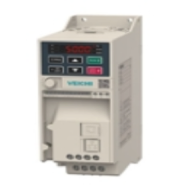
Danfoss VLT Micro Drive FC 51 Fault and Alarm Codes — Reference Guide
The Danfoss VLT Micro Drive FC 51 is one of the most widely used compact variable frequency drives. It is straightforward to install and reliable when properly wired — but when an alarm code appears on the display, many users are left guessing. What does the number mean? Can it be reset manually? Does it need service?
This page is a complete reference for FC 51 alarm and fault codes. It includes a full alarm table, step-by-step diagnostics for the six most common faults, and an explanation of Trip Lock — the situation where the drive cannot be reset without first fixing the underlying problem. The same codes apply to FC51 (no space) and to the Danfoss FC 101 HVAC Drive — both share identical protection architecture.
For a broader overview of fault codes across multiple VFD brands, see our article on VFD error codes for ABB, Danfoss, INVT and Schneider.
FC 51 Alarm and Warning Code Table
The FC 51 uses three response levels: Warning (drive continues running, signals approach to limit), Alarm/Trip (drive stops, requires reset command) and Trip Lock (drive stays blocked until the fault is physically resolved — reset command has no effect).
| Code | Name | Type | Cause |
|---|---|---|---|
| AL 1 | 10V supply low | Alarm | Voltage at terminal 50 below 10V — overloaded external sensor or short circuit in analog supply circuit |
| AL 2 | Live zero error | Warning/Alarm | Analog input signal below minimum threshold (e.g. broken cable with 4-20 mA configuration) |
| AL 3 | No motor | Warning/Alarm | Drive detects no connected motor — broken phase cable or motor disconnected |
| AL 4 | Mains phase loss | Warning/Alarm | Loss of one or more supply phases |
| AL 5 | DC link voltage high | Warning | DC bus voltage exceeds upper warning threshold — not yet a trip, but approaching overvoltage |
| AL 6 | DC link voltage low | Warning | DC bus voltage below lower warning threshold |
| AL 7 | DC overvoltage | Alarm/Trip | Overvoltage in DC circuit — most often caused by too short a deceleration ramp without a brake resistor |
| AL 8 | DC undervoltage | Alarm | Insufficient supply voltage — mains dips or low input voltage |
| AL 9 | Inverter overloaded | Warning/Alarm | Inverter overload — sustained current above rated value |
| AL 10 | Motor ETR too hot | Warning/Alarm | Electronic thermal relay protection triggered — motor overheating per calculated thermal model |
| AL 11 | Motor thermistor overtemp | Warning/Alarm | Motor thermistor has detected overtemperature |
| AL 12 | Torque limit exceeded | Warning/Alarm | Torque limit reached — motor cannot overcome the load |
| AL 13 | Overcurrent | Alarm/Trip | Current exceeded protection threshold — mechanical jam, rapid acceleration or faulty motor |
| AL 14 | Earth fault | Trip Lock | Ground fault in motor circuit — must be resolved before reset is possible |
| AL 15 | Short circuit | Trip Lock | Short circuit in output circuit or inside the motor |
| AL 16 | Short circuit (hardware) | Trip Lock | Hardware short circuit detected by power switch protection circuit |
| AL 17 | Control word timeout | Warning/Alarm | Loss of communication on control bus — control word timeout |
| AL 22 | Hoisting mechanical brake | Alarm | Mechanical brake fault in hoisting application |
| AL 23 | Internal fan fault | Warning/Alarm | Internal cooling fan not rotating or rotating too slowly |
| AL 24 | External fan fault | Warning/Alarm | External cooling fan not operating |
| AL 25 | Brake resistor short circuit | Alarm/Trip | Short circuit in brake resistor |
| AL 26 | Brake resistor power limit | Warning | Brake resistor has reached its power dissipation limit |
| AL 27 | Brake chopper short circuit | Alarm/Trip | Short circuit in brake chopper transistor |
| AL 28 | Brake chopper failure | Alarm/Trip | Brake chopper failure — not switching or not releasing |
| AL 29 | Drive overtemperature | Alarm/Trip | Heatsink or power module overtemperature |
| AL 30 | Motor phase U missing | Alarm | Phase U missing at motor output |
| AL 31 | Motor phase V missing | Alarm | Phase V missing at motor output |
| AL 32 | Motor phase W missing | Alarm | Phase W missing at motor output |
| AL 33 | Inrush fault | Alarm/Trip | Abnormal inrush current at power-on |
| AL 34 | Fieldbus communication fault | Warning/Alarm | Fieldbus communication error (Modbus, Profibus, etc.) |
| AL 36 | Mains failure | Alarm | Mains supply lost during operation |
| AL 38 | Internal fault | Alarm/Trip | Internal fault — microprocessor or memory error. Requires restart or service |
| AL 46 | PTC supply fault | Alarm | PTC thermistor supply circuit fault |
| AL 47 | 24V supply low | Alarm | Internal 24V supply below acceptable level |
| AL 60 | External interlock | Alarm | External interlock triggered — thermostat, pressure switch or other safety signal activated |
Most Common FC 51 Faults — Step-by-Step Diagnostics
Based on service calls we handle, six fault codes come up repeatedly — almost always for the same reasons.
AL 7 — DC overvoltage: braking energy has nowhere to go
The fastest way to get AL 7 is to set too short a deceleration ramp with high-inertia load. The drive tries to brake the motor, but the regenerated energy cannot dissipate — DC bus voltage climbs above 800V and the drive trips.
- Check: parameter 3-42 (Ramp 2 Down Time) — increase deceleration time
- If fast braking is required: install a brake resistor — it absorbs the surplus energy
- Check mains voltage: supply voltage above 253V can also trigger AL 7 even without active braking
AL 13 — Overcurrent: diagnosing the real cause
AL 13 is an overcurrent protection trip, but the root cause varies. Mechanical jam, starting under load without proper ramp settings, or simply a motor too large for the drive.
- Check the mechanical side — does the motor shaft turn freely by hand?
- Check no-load current — if it is already close to rated, the motor is structurally overloaded
- Increase acceleration ramp time (parameter 3-41, Ramp 1 Up Time)
- Verify motor nameplate data entered correctly in parameters 1-20 through 1-25
AL 29 — Drive overtemperature: almost always a ventilation problem
The FC 51 is a compact drive and its thermal performance depends heavily on proper installation. Overtemperature rarely means a faulty drive — it nearly always means poor airflow.
- Minimum clearance above and below — 100 mm, between drives in a row — 50 mm
- Ambient temperature must not exceed +40°C without derating
- Check the cooling fan — AL 23 often precedes AL 29 by a few hours or days
- Drives in sealed enclosures without forced ventilation will overheat under sustained load
AL 14 — Earth fault: Trip Lock, must fix before resetting
AL 14 is a Trip Lock fault. Pressing Reset does nothing until you locate and fix the ground fault. This alarm points to damaged insulation in the motor cable or motor windings.
- Disconnect the motor cable from drive output terminals U, V, W
- Test cable insulation with a megohmmeter: resistance between each conductor and screen/earth must exceed 1 MOhm
- Test motor winding insulation separately
- If damage is found — replace the cable or arrange motor repair
AL 10 — Motor ETR: calculated thermal protection
ETR (Electronic Thermal Relay) is a software thermal model. It calculates motor heating based on current history. If motor nameplate data in parameter 1-24 (Motor Current) is wrong, ETR may trip even during normal operation.
- Verify parameter 1-24 matches the motor nameplate current rating
- Check parameter 1-61 (Motor ETR Setting) — enabled by default, works for most standard motors
- If the motor is actually hot to the touch — reduce load or improve cooling
AL 2 — Live zero error: broken 4-20 mA signal
When the analog input is set for 4-20 mA and the signal drops below 2 mA, the FC 51 treats this as a broken sensor and raises AL 2. Common causes: wrong wiring, broken cable, or failed sensor.
- Check sensor wiring to terminals 53/54 and 55 (common)
- Check parameter 6-16 (Terminal 53 Low Current) — default is 4 mA
- If the sensor is healthy — test the cable for open circuit or loose connection
Trip Lock Faults — What to Do When the Drive Will Not Reset
Trip Lock means the drive stays blocked regardless of reset commands. Three FC 51 codes are Trip Lock by default: AL 14 (earth fault), AL 15 and AL 16 (short circuits).
Procedure for Trip Lock faults:
- Switch off drive power and wait 5 minutes for DC bus to discharge
- Disconnect motor cable from output terminals U/V/W
- Test insulation with megohmmeter — cable and motor separately
- For AL 15/16: also check for foreign objects in motor, verify cable termination integrity
- Fix the identified fault
- Restore power — if the fault is resolved, the drive should exit Trip Lock automatically
For more on VFD failures and repair procedures, see our guide on frequency converter breakdowns and repairs.
Configuring Fault Responses in FC 51
The FC 51 allows you to customise how the drive responds to specific faults. This is useful when the default behaviour does not fit your application.
Parameter Group 14-xx — Drive Information / Fault Handling
- 14-10 Mains Failure: action on mains loss — Trip, Coast or Kinetic backup
- 14-12 Function at Mains Imbalance: response to mains imbalance — Warning or Trip
- 14-20 Reset Mode: manual or automatic reset (and number of auto-restart attempts)
- 14-21 Automatic Restart Time: delay before automatic restart (0-600 s)
- 14-22 Operation Mode: normal operation or service mode
Automatic Restart
Parameter 14-20 supports up to 20 automatic reset attempts with adjustable interval. This is practical for pump and fan applications where brief mains interruptions are common. Do not enable auto-restart for hoisting equipment — uncontrolled restart is a safety hazard.
AL 2 Response (Live zero)
Parameter 6-01 (Live Zero Timeout Function) sets what happens when the analog signal is lost: stop, go to a preset frequency, or hold the last commanded frequency. For pumps, stopping is typical. For ventilation systems, a fixed fallback frequency of 30-40 Hz is common.
For fault code comparisons across other popular drives, see VFD error codes for ABB, Danfoss, INVT and Schneider.
Frequently Asked Questions
What is the difference between Warning and Alarm on the FC 51?
A Warning means the drive continues running but has detected a condition approaching a limit. An Alarm (Trip) means the drive has stopped and requires a reset command or button press. Trip Lock is a separate state where no reset is effective until the physical fault is fixed.
How do I reset a fault on the Danfoss FC 51?
Press the Reset button on the LCP keypad, or apply a Reset signal to the configured digital input (default: terminal 27). You can also reset via parameter 14-20 or via a Modbus command. For Trip Lock faults, power down the drive first, fix the fault, then restore power.
What is AL 38 Internal fault and how do I fix it?
AL 38 indicates a microprocessor or memory fault inside the drive. First try a full power-down for 5-10 minutes. If AL 38 reappears after restart, try a factory reset via parameter 14-22 (Operation Mode → Factory reset). If the fault persists, the drive requires professional service or replacement.
Do these codes apply to the Danfoss FC 101 HVAC Drive?
Yes, largely. The FC 101 shares the same core protection architecture as the FC 51, and most alarm numbers and meanings are identical. However, the FC 101 has additional application-specific codes related to its advanced pump and fan control features that are not present in the FC 51.
How can I prevent AL 7 (DC overvoltage) without a brake resistor?
Increase the deceleration ramp time in parameters 3-42 / 3-82 (Ramp Down Time). For loads with significant inertia, enable the Over-voltage control function (parameter 2-17) — it automatically extends the deceleration ramp when DC bus voltage approaches the trip threshold. This does not replace a brake resistor for demanding applications, but works well for lighter loads.
If your FC 51 has failed or needs replacement, browse our Danfoss frequency converter catalogue. We can source genuine units and compatible alternatives from stock.