Robot Drive Modules — What They Are and Where They Are Used
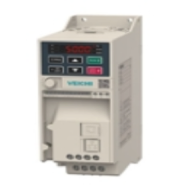
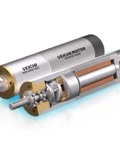
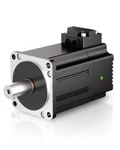
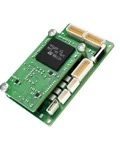
Robot drive modules integrate a servo motor, gearbox, and drive electronics into a single housing. Unlike a standalone servo drive, a modular actuator is ready to mount in a robot joint in one step: connect CAN or EtherCAT and the joint is fully controllable. This is the design philosophy behind the Veichi RB-series and FT1 lineup — from ECH6/ECH8 micro-actuators (6–16 mm OD) for finger-scale robots to the RB200-G90I rated at 127 N·m for six-axis industrial arms.
Core application areas: Veichi 6-axis industrial robots, collaborative robots (cobots), AGV/AMR mobile platforms, exoskeletons, medical manipulators, agricultural automation, and rehabilitation devices.
How to Choose a Robot Drive Module
| Model | Power (W) | Rated Torque (N·m) | Reducer Type | Typical Use |
|---|---|---|---|---|
| Veichi RB200-G30I | 31 | 9.5 | Harmonic drive | Small shoulder / wrist joint |
| Veichi RB200-G90I | 380 | 127 | Harmonic drive | Main shoulder of manipulator |
| Veichi RB100-W110 | 200 | — | Wheel (70 kg load) | AGV / mobile platform |
| Veichi RB300-F60 | 200 | — | Flange (60 mm) | Linear axis / positioning table |
| Veichi FT1-055 | 100 | 0.32 | Direct drive | High speed / low torque |
1. Rated torque. Calculate the maximum static torque at the joint under full arm extension. Apply a 30–40% safety margin over the peak value — RB200-G90I delivers 127 N·m rated and 254 N·m peak.
2. Reducer type. Harmonic drive (RB200): near-zero backlash, compact profile — ideal for precision positioning (<0.01°). Planetary (PG-series): higher efficiency at large gear ratios. Direct drive (FT1, ECH): minimum reflected inertia for HRI and rehabilitation limbs.
3. Communication interface. CANopen: standard for most open robotics platforms. EtherCAT: deterministic multi-axis sync with cycle time <1 ms. Modbus RTU: integrates with PLCs and HMI panels without gateways. ProfiNet: Siemens-oriented lines.
4. IP rating. IP54 (RB200, RB300, SD200): food processing, packaging lines. IP67 (FT1, SD100, RB100): washdown lines, agriculture.
5. STO function. SD100 and SD200 support Safe Torque Off (STO, IEC 62061 SIL2) — mandatory for collaborative robots per EN ISO 10218-1.
Manufacturers in the Catalogue
Veichi Electric is currently the only brand in this category. Full Veichi Robotics catalogue: VCR 6-axis arms, VCC cobots, SCARA, VCP palletizers, RB/FT1/ECH/SD component range for OEM developers. In stock: 48+ SKUs across robot drive series.
Robot Drives by Specification
- 48 V DC supply — RB200, RB300, FT1, SD200 series
- 24 V DC supply — ECH micro-motors
- IP67 — FT1, RB100, SD100
- IP54 — RB200, RB300, SD200
- PG planetary gearboxes
- YZ-T6 dexterous hand
Warranty and Support
Veichi robot drive modules carry a 12-month warranty from delivery date. Nationwide delivery via Nova Poshta. Bulk orders (10+ units) — contact via the contacts page. Technical support covers module selection for your kinematic design, CANopen/EtherCAT commissioning, and inertia calculation. Our team has 10+ years of experience deploying servo drives and frequency converters.