Why You Need a 3 kW Hybrid Inverter
Power outages in Ukraine have become a daily reality, pushing millions of households to seek autonomous power solutions. But not everyone needs a 10 kW powerhouse: for a 40–70 m² apartment or a small office, a 3 kW hybrid inverter provides just the right amount of backup. It is the entry level of energy autonomy — enough to keep your fridge running, lights on, internet connected, and devices charged during a blackout.
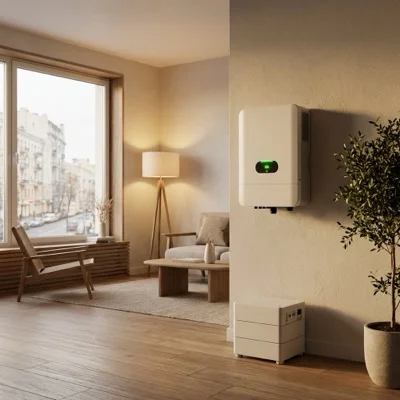
A hybrid inverter (unlike a basic UPS or generator) combines three functions in one unit: it converts DC battery power to 220 V AC, charges the battery from the grid or solar panels, and automatically switches to battery when grid power drops. Switchover time is 10–20 ms — your computer will not even restart.
What Can a 3 kW Inverter Actually Power
Three kilowatts is the continuous rated output. In practice, typical household loads rarely exceed 1–1.5 kW unless you turn on high-power heating appliances. Here is a realistic breakdown for a standard apartment:
| Appliance | Power Draw | Daily Runtime | Consumption |
|---|---|---|---|
| Refrigerator | 100–150 W (compressor) | ~8 hours (cycling) | 0.8–1.2 kWh |
| Wi-Fi Router | 10–15 W | 24 hours | 0.24–0.36 kWh |
| LED Lighting (5 bulbs) | 50 W | 6 hours | 0.3 kWh |
| Laptop | 50–65 W | 6 hours | 0.3–0.4 kWh |
| Phone Charging (2 units) | 20 W | 3 hours | 0.06 kWh |
| 40" TV | 60 W | 4 hours | 0.24 kWh |
| Total | ~300–360 W average | ~2–2.5 kWh |
Momentary peaks (for example, fridge compressor startup) can reach 500–800 W, but that is well below the 3,000 W limit. There is even headroom for a microwave (900 W) or a hairdryer on low (1,000 W) — just avoid running them simultaneously.
What NOT to connect to 3 kW: electric kettle (1.5–2 kW), water heater (1.5–2 kW), washing machine with heating, air conditioner (1.2–2.5 kW at startup). If these appliances are essential, consider a 5 kW inverter or higher.
Battery for a 3 kW Inverter: How Many Hours of Autonomy
An inverter without a battery is just a converter. Autonomy depends entirely on battery capacity. The standard solution for 3 kW systems is a single lithium iron phosphate (LiFePO4) battery rated at 48 V (51.2 V) with 100 Ah capacity, providing approximately 5 kWh of usable energy.
Autonomy calculations at an average load of 300–400 W:
- 5 kWh (1 x 100 Ah at 51.2 V) — 12–16 hours at 300 W load, or 5–6 hours at 800 W
- 10 kWh (2 x 100 Ah or 1 x 200 Ah) — a full 24 hours of autonomy at baseline load
Recommended battery models from our catalogue:
| Model | Capacity | Type | Compatibility |
|---|---|---|---|
| Veichi VCLB-5K-D01 | 51.2 V / 5 kWh | LiFePO4, floor-standing | Veichi VHS-3K-30-H, Deye |
| Felicity LPBA48100-OL | 51.2 V / 5.12 kWh | LiFePO4 | Any 48 V inverter |
| Rosen BAT-51.2V-200AH | 51.2 V / 10 kWh | LiFePO4, rack-mount | Double capacity |
LiFePO4 is the optimal choice: 6,000+ charge cycles, fire-safe chemistry, operating temperature range of −10 to +55 degrees C, and maintenance-free. Lead-acid AGM batteries are cheaper but twice as heavy, offer 5 times fewer cycles, and have a limited depth of discharge (50% vs 90% for LiFePO4).
3 kW Hybrid Inverter Models in Our Catalogue
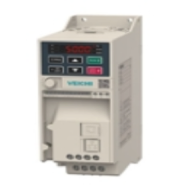
The selection of 3 kW hybrid inverters on the Ukrainian market is limited. Our catalogue features the Veichi VHS-3K-30-H — a three-phase solar hybrid inverter rated at 3 kW. We also consider the closely rated Veichi VHS-3.6K-30-H at 3.6 kW.
Veichi VHS-3K-30-H — 3 kW Three-Phase
- Power: 3 kW rated output
- Grid type: 3-phase / 380 V
- Battery voltage: high-voltage (up to 450 V), compatible with Veichi HV batteries
- MPPT range: 100–550 V, optimal for 4–6 solar panels
- Efficiency: up to 97.6%
- Advantages: three-phase connection, high-voltage battery (lower currents, lower losses), built-in MPPT controller
Veichi VHS-3.6K-30-H — 3.6 kW Three-Phase
- Power: 3.6 kW — 20% more than the VHS-3K
- Same advantages: three-phase grid, high-voltage battery, MPPT 100–550 V
- Best for: when 3 kW is borderline but 5 kW is overkill and over budget
For apartments with a single-phase 220 V grid, the closest alternative is the Veichi VHS-5K-L01-K (silent 5 kW model with a 48 V battery). There are currently no single-phase 3 kW models in the catalogue, so for single-phase setups we recommend either stepping up to 5 kW or browsing the full hybrid inverter catalogue.
3 kW vs 5 kW: When Less Is Enough and When to Upgrade
This is the most common question, and the answer depends on your specific use case:
| Criterion | 3 kW | 5 kW |
|---|---|---|
| Floor area | Apartment 30–70 m², small office | House 80–150 m², large office |
| Baseline load | Fridge + lights + internet | + washing machine, pump, water heater (one at a time) |
| Peak current | Up to 3 kW | Up to 5 kW |
| Solar panels | 2–4 panels at 500 W | 4–8 panels |
| Battery (min.) | 1 x 5 kWh | 1–2 x 5 kWh |
| Typical budget (system) | from 80,000 UAH | from 120,000 UAH |
| Best for | Minimal apartment backup | Full home autonomy |
Choose 3 kW if: you live in an apartment, do not plan to connect high-power appliances, and want the minimum budget for electricity backup during blackouts.
Choose 5 kW if: you own a house, need to power a heating pump or washing machine, or plan a full-scale solar installation.
Connecting Solar Panels
A 3 kW hybrid inverter can work solely from grid+battery, or with solar panels. The built-in MPPT controller converts panel energy into charging current for the battery or directly powers your loads.
For a 3 kW system, 2–4 panels rated at 500–550 W (1–2 kW total peak) are sufficient. This yields:
- In summer (5–6 sun hours): 5–12 kWh per day — full 5 kWh battery charge plus surplus for direct consumption or grid export
- In winter (1.5–2.5 hours): 1.5–5 kWh — partial charge, the grid covers the rest
Even a small solar array significantly reduces electricity bills and extends autonomy during outages — the battery discharges more slowly during daylight hours.
Installation and Setup: Key Considerations
Installing a 3 kW hybrid inverter is a relatively straightforward process, but it requires a qualified electrician:
- Mounting location: dry, ventilated wall, within 3 m of the battery (shorter cables mean lower losses)
- Wiring: for 3 kW, 4 mm² cable is sufficient for the AC line and 6 mm² for the battery connection
- Grounding: mandatory — PE conductor to the grounding loop
- Circuit breaker: 16 A on the input line, battery line breaker sized to maximum current
- Bypass switch: recommended — allows bypassing the inverter during servicing
Most modern hybrid inverters include a Wi-Fi module for monitoring via a mobile app: battery charge level, current load, solar generation, consumption history. Initial setup typically takes 20–30 minutes.
Frequently Asked Questions (FAQ)
Is a 3 kW inverter enough for an apartment?
Yes, for a typical 40–70 m² apartment, a 3 kW inverter covers all essential loads: refrigerator, LED lighting, Wi-Fi router, phone and laptop charging. Average consumption of these appliances is 300–500 W, leaving plenty of headroom. The only limitation is that you cannot simultaneously run high-power heating appliances (kettle, water heater, space heater).
How many hours does a 3 kW hybrid inverter run on battery?
With a single 5 kWh battery (51.2 V, 100 Ah) at an average load of 300–400 W, autonomy is 12–16 hours. This is more than enough for an overnight blackout. If you need a full 24 hours, add a second battery or choose a 200 Ah unit (10 kWh).
Can I connect solar panels to a 3 kW inverter?
Yes, Veichi VHS series hybrid inverters have a built-in MPPT controller. For a 3 kW system, 2–4 panels rated at 500 W are optimal — they will produce 5–12 kWh per day in summer, covering baseline consumption and charging the battery.
Which battery should I choose for a 3 kW inverter?
We recommend LiFePO4 batteries rated at 51.2 V. The minimum comfortable capacity is 5 kWh (100 Ah). For example, the Veichi VCLB-5K-D01 or Felicity LPBA48100-OL. LiFePO4 provides 6,000+ cycles — that is over 10 years of daily use.
How does a 3 kW hybrid inverter compare to a generator?
An inverter operates silently, requires no fuel, switches over in 10–20 ms (your equipment stays on), produces no exhaust fumes, and needs minimal maintenance. A generator is noisy (60–80 dB), consumes 0.5–1 litre of petrol per hour, requires manual start, and regular servicing. For an apartment, a generator is simply impractical — a hybrid inverter with a battery is the ideal solution.