What Is a VFD and Where Is It Applied
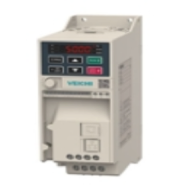
A variable frequency drive (VFD, also called an AC drive, inverter, or frequency converter) is a power electronic device that controls the speed of an AC motor by varying the frequency and voltage of the power supply. Instead of running at fixed speed, a frequency converter allows smooth speed regulation from zero to nominal and beyond. The result is precise process control, 20% to 60% energy savings, and extended equipment lifespan.
VFD applications span virtually every industry: from HVAC systems in commercial buildings to high-precision positioning in metalworking. Below we examine each application area, compare requirements, and help you select the right drive type.
HVAC: Ventilation and Air Conditioning
Ventilation systems are the textbook example of VFD application. Fans and blowers create a load that increases proportionally to the cube of speed (the fan affinity law). This means reducing speed by just 20% cuts power consumption nearly in half.
Frequency converters for ventilation operate in scalar mode (V/f), which is ideal for variable torque loads. Key advantages:
- 30–60% energy savings — automatic performance adjustment based on actual airflow demand.
- Soft starting — eliminating inrush currents (5–7x nominal) extends bearing and belt drive lifespan.
- Noise reduction — slower fan rotation significantly reduces aerodynamic noise.
- Constant pressure control — feedback from pressure or CO₂ sensors enables precise climate regulation.
- Network integration — Modbus/BACnet connectivity for building management systems (BMS).
Recommended series: Schneider Electric Altivar (ATV320, ATV630), Danfoss VLT HVAC Drive (FC 102), ABB ACH580. For small fans up to 2.2 kW, consider 2.2 kW frequency converters.
Pumping Systems
Pumps are the second most common VFD load type after fans. Like fans, centrifugal pumps follow the cube law for power vs. speed, making frequency control extremely effective.
Key application scenarios for frequency converters for pumps:
- Water supply — maintaining constant pressure regardless of consumer count. Detailed setup instructions with pressure sensor.
- Cascade control — sequential pump staging with automatic on/off switching based on demand.
- Borehole pumps — dry-run protection and soft starting without water hammer.
- Circulation systems — heating, cooling, process water loops.
- Drainage and sewage stations — level-based operation with float or pressure sensors.
- For single-phase domestic pumps, specialized solutions exist: VFDs for single-phase pumps with 220V supply.
Real savings at pumping stations reach 40–50% of electricity costs. Equipment payback period ranges from 6 to 18 months depending on power rating and operating regime.
Conveyor Systems
Conveyors create a constant torque load on the motor shaft (unlike the quadratic load from fans). A VFD for conveyor applications solves several problems simultaneously:
- Belt speed regulation — adjusting to production line throughput or cargo type.
- Smooth start and stop — preventing belt slippage and material spillage.
- Section synchronization — multiple drives operate in coordination via communication bus (master/slave).
- Jam protection — torque limiting prevents damage to mechanical components.
- Precise dosing — belt scales with VFD enable continuous weighing.
For conveyors, drives with vector control are recommended, providing full torque at low speeds. Series: Siemens SINAMICS G120, ABB ACS580, Mitsubishi Electric FR-E800.
Compressor Equipment
Compressors are among the largest electricity consumers in manufacturing. Retrofitting a compressor with a VFD enables:
- Eliminating load/unload cycling — instead of on-off operation, the compressor smoothly adjusts output to actual compressed air demand.
- Reducing wear — fewer starts mean longer bearing, valve, and belt drive service life.
- Pressure stabilization — network pressure fluctuations decrease from ±1 bar to ±0.1 bar.
- 25–35% energy reduction — by eliminating losses from excess pressure blow-off.
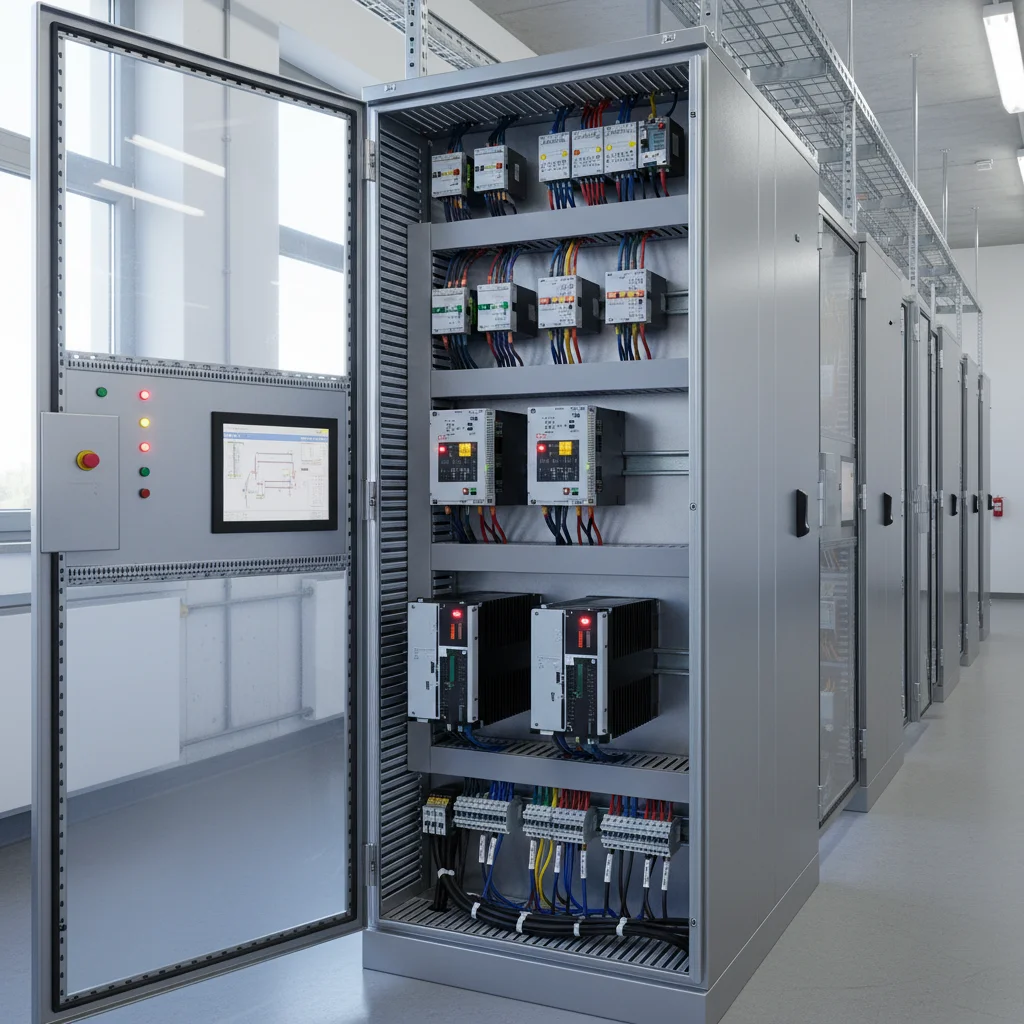
For screw compressors rated 7.5–22 kW, optimal models include 7.5 kW, 11 kW, 15 kW, and 22 kW drives. A built-in EMC filter and IP54+ protection rating are essential for dusty compressor room environments.
Hoisting Equipment and Cranes
Crane equipment is one of the most demanding load types for a VFD. A hoist mechanism operates in four quadrants: acceleration, braking, lifting, and lowering. The motor may both consume and generate energy (regeneration mode).
Key requirements for a crane frequency converter:
- Four-quadrant control — full torque control in all operating modes.
- Built-in braking module — or external braking resistor to dissipate energy during load lowering.
- Load holding — zero-speed holding function prevents load drift at standstill.
- High starting torque — 150–200% rated torque from zero speed.
- Overload capacity — 150% for 60 seconds, 200% for 3 seconds.
For crane applications, select drives with vector control and encoder support: VEICHI AC310, Schneider Electric ATV930, Siemens G120 with CU250S-2. Comparison with soft starters: Top questions about VFDs and soft starters.
Precision Positioning and Metalworking
Machine tools, spindles, and coordinate tables demand maximum dynamics and accuracy from the drive. In these applications, the VFD operates in closed-loop mode with a feedback sensor (encoder or resolver).
Positioning accuracy — down to ±0.01 mm using vector control with encoder.
Fast response — setpoint response time under 5 ms.
Wide speed range — 1:1000 and beyond for precision tasks.
Torque control — force limiting during thread cutting or lapping operations.
For precision applications, choose vector control VFDs or servo drives. The cost difference: a VFD with encoder costs 30–40% less than a servo system with comparable dynamic performance.
VFD Application Comparison Table
| Parameter | HVAC | Pumps | Conveyors | Compressors | Cranes | Machine Tools |
| Load type | Variable (cubic) | Variable (cubic) | Constant | Constant | Impact | Variable |
| Control mode | Scalar V/f | Scalar / PID | Vector | Vector | Vector + encoder | Vector + encoder |
| Overload | 110% / 60s | 110% / 60s | 150% / 60s | 120% / 60s | 200% / 3s | 150% / 60s |
| Energy savings | 30–60% | 30–50% | 10–20% | 25–35% | 15–25% | 10–15% |
| Payback period | 6–12 mo. | 6–18 mo. | 12–24 mo. | 8–14 mo. | 12–24 mo. | 18–36 mo. |
| IP rating | IP20–IP54 | IP54–IP65 | IP20–IP54 | IP54+ | IP20 (in cabinet) | IP20 (in cabinet) |
| Braking resistor | No | No | If needed | No | Mandatory | If needed |
VFD vs. Soft Starter: When to Choose Which
Not every application requires a variable frequency drive. Soft starters cost less and are suitable where speed control is not needed:
Soft starter — when the motor runs at constant speed but needs smooth acceleration without current spikes. Examples: full-load pumps, crushers, mills.
VFD — when smooth speed regulation, parameter maintenance (pressure, flow, temperature), or reversing is required.
For pumps: if the system operates at 90–100% load most of the time, a soft starter for pump is sufficient. If the load varies, only a VFD will deliver real savings.
How to Select a VFD by Application Type
Frequency converter selection algorithm:
Identify the load type — variable (fans, pumps) or constant (conveyors, extruders). This determines the overload regime (light or heavy duty).
Calculate power rating — motor rated power + 10–20% margin for starting. For cranes and machine tools, add 30–50% margin.
Select supply voltage — single-phase 220V, three-phase 380V, or specialized 220V to 380V converters for connecting a three-phase motor to a single-phase supply.
Determine control mode — scalar for simple tasks or vector for precise torque control.
Consider operating conditions — temperature, dust, humidity determine the required IP protection rating and EMC filter necessity.
VFD Manufacturers in the Chastotnik.ua Catalog
We offer equipment from leading global manufacturers, proven in thousands of applications across Ukraine:
- Schneider Electric — Altivar ATV320/ATV630/ATV930 series for any task from basic to high-dynamic.
- Siemens — SINAMICS G120/G120C lineup for industry and infrastructure.
- ABB — ACS580 (general purpose), ACH580 (HVAC), ACS880 (high-precision) series.
- Danfoss — VLT series FC 51 (basic), FC 102 (HVAC), FC 302 (high-precision).
- Mitsubishi Electric — FR-E800 (compact), FR-A800/FR-F800 (precision and HVAC).
- VEICHI — AC310 (crane), AC10/AC01 (general purpose) series with optimal price-to-performance ratio.
- Delta Electronics — VFD-E, VFD-C2000 series for a wide range of applications.
- INVT — cost-effective solutions for HVAC, pumps, and conveyors.
All drives are available in our frequency converter catalog with delivery across Ukraine. For application-specific equipment selection, contact our engineers — we will help you find the optimal solution considering your budget and technical requirements.